



Polymer foil
Polymer foil is a printable self-adhesive material for medium-term advertising on vehicles, signs, billboards and exhibition displays. It is a practical choice where graphics must remain clear during outdoor exposure, including locations with intensive UV radiation. The material works well on flat and slightly curved surfaces, can be cut to size or shape, and is available with adhesive options that support different installation and removal needs.
| Printing technology | UV, Solvent HR, UV flat |
|---|---|
| Thickness | 80 μ |
| Print resolution | 1440 dpi |
| Maximum material width | 1,52 m |
| Finish of material | cut to shape, cut to size |
| Intended use | surfaces with large embossing |

Price from: €8,30 /m2



Polymeric foils available in our offer
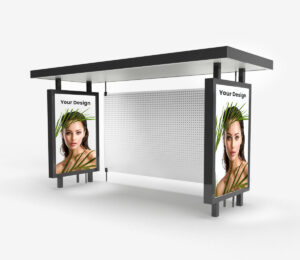
Polymer foil is used for printed advertising applications that require a stable self-adhesive material, good visual quality and reliable installation on flat or moderately shaped surfaces. It is commonly selected for vehicle markings with light body embossing, side doors, bonnets, signs, billboards and trade fair stand arrangements. The material is also suitable for retail, office, hotel, restaurant, medical and showroom environments where branded information or promotional graphics need a clean, professional finish.
When to choose polymer foil
This product is a good fit for medium-term advertising, especially in places exposed to sunlight and outdoor conditions. The 80 μ material supports detailed printing, while available print technologies, including UV, Solvent HR and UV flat, make it possible to match production to the project and expected use. Print resolution up to 1440 dpi helps achieve sharp lettering, readable details and saturated colours for advertising messages.
Applications and surface requirements
Polymer foil performs best on flat, smooth and slightly curved surfaces. It can also be considered for selected embossed surfaces, but it is not intended for deep embossing, strong curves or concave areas. For demanding three-dimensional wrapping, cast film should be selected instead. Correct material choice reduces the risk of lifting, tension in the film and premature edge failure.
- vehicle advertising on lightly shaped body panels;
- wrapping slightly curved car elements such as doors or bonnets;
- medium-term outdoor advertising exposed to UV radiation;
- billboards, signs and shop information systems;
- trade fair stands, showrooms and branded interior displays.
Adhesive and finishing options
The foil can be supplied with permanent, easy-to-remove or channelled adhesive. Permanent adhesive is used where a stable, long-lasting bond is required. Easy-to-remove adhesive simplifies later removal from many surfaces. Channelled adhesive speeds up installation and helps reduce air bubbles, which is especially useful for vehicle applications. Grey or black adhesive layers are available when the base surface needs to be visually masked. The material can be cut to size or cut to shape, with a maximum material width of 1.52 m.
How to specify polymer foil for a project
When ordering polymer foil, the most important decision is not only the printed design, but also the surface, exposure conditions and expected service life of the advertisement. For flat boards, retail signs and interior branding, a standard adhesive may be enough. For vehicle graphics, especially on panels with light shaping, a channelled adhesive can make installation faster and cleaner by allowing air to escape during application.
The product is often referred to by customers as polymer vinyl, polymeric vinyl or polymeric self-adhesive film. These terms are commonly used in advertising production, but in this product card the main name remains polymer foil. If the project includes deep recesses, strong curves or complex vehicle bodywork, polymer foil should not be treated as a substitute for cast film.
Choosing the adhesive layer
- Permanent adhesive is suitable for stable applications where the graphic is expected to stay in place for the full campaign period.
- Easy-to-remove adhesive is useful for campaigns, temporary markings or surfaces where later removal should be less demanding.
- Channelled adhesive is recommended when installation speed and reduction of air bubbles are important, especially on vehicles.
- Grey or black adhesive helps mask an unattractive or visually uneven base surface under the printed foil.
Laminate, finish and durability
A gloss or matt laminate can be added when the print needs extra protection. Laminate helps reduce the risk of scratches and supports longer colour clarity. A gloss laminate gives a smooth, more reflective finish, while a matt laminate lightly diffuses incident light and can be a better choice in areas where reflections may disturb readability. According to the available product option, lamination extends the life of the film by an additional 2 years on average.
File and production considerations
For best production results, prepare artwork at the correct final size and include clear cut lines when the foil is to be cut to shape. Small text, thin lines and QR codes should be checked at viewing distance and final scale before production. If the graphic will be divided into panels, consider overlaps and the installation direction, particularly for vehicle or large-format applications.
Printing on polymer foil is carried out using solvent technology where specified, and the product may also be produced using UV, Solvent HR or UV flat technologies depending on the job requirements. Before application, the surface must be completely dry and cleaned of dust and grease. Skipping surface preparation is one of the most common causes of weak adhesion, visible contamination under the foil or edge lifting after installation.
Typical mistakes to avoid
- using polymer foil on deep concaves or complex three-dimensional shapes;
- applying the film to a damp, dusty or greasy surface;
- choosing transparent or light adhesive when the base surface needs masking;
- preparing cut-to-shape artwork without accurate cutting paths;
- selecting a high-gloss finish where strong reflections may reduce readability.