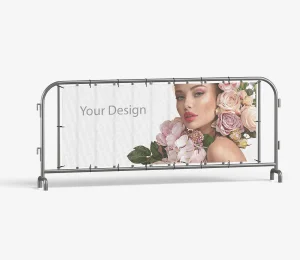
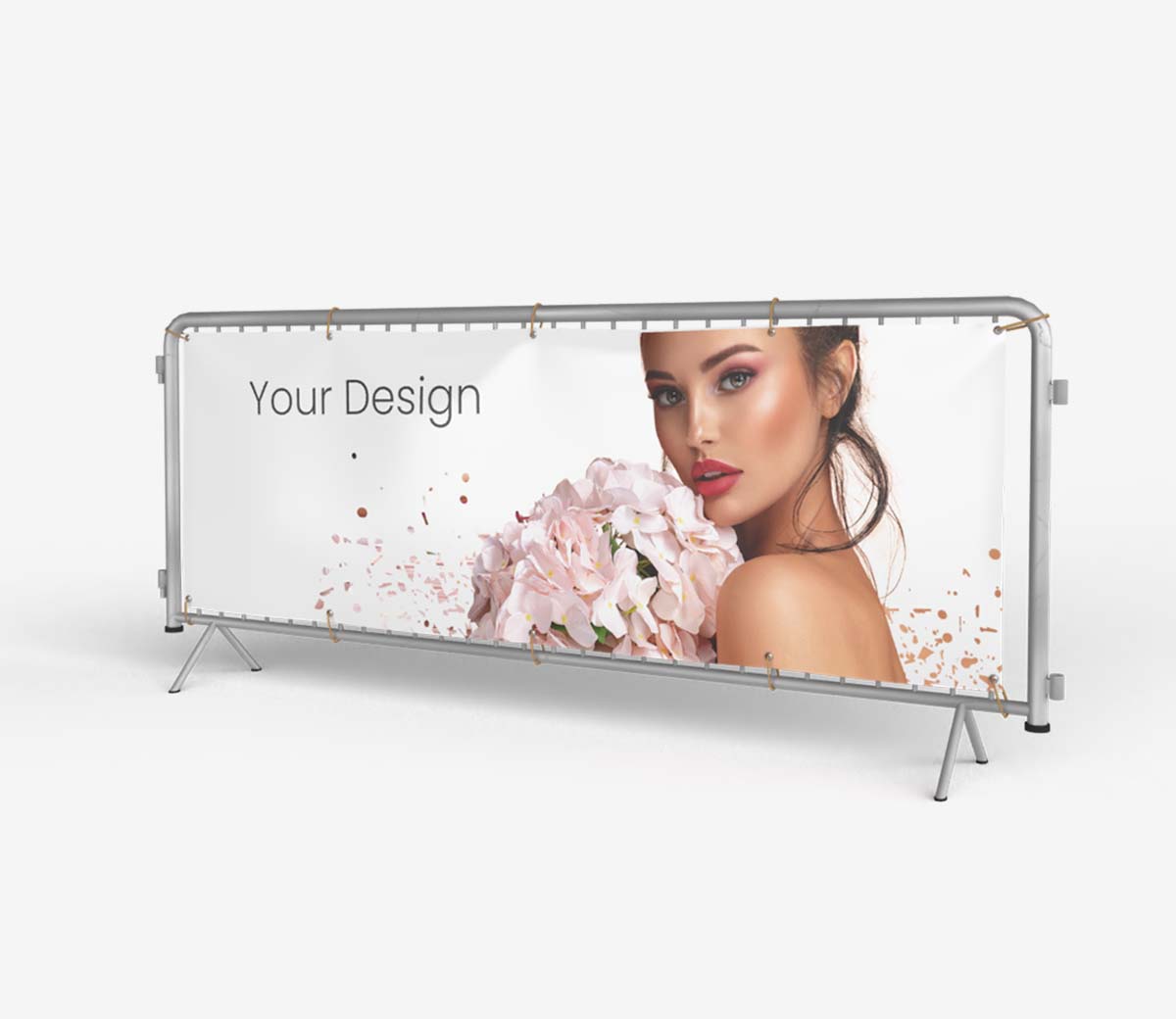
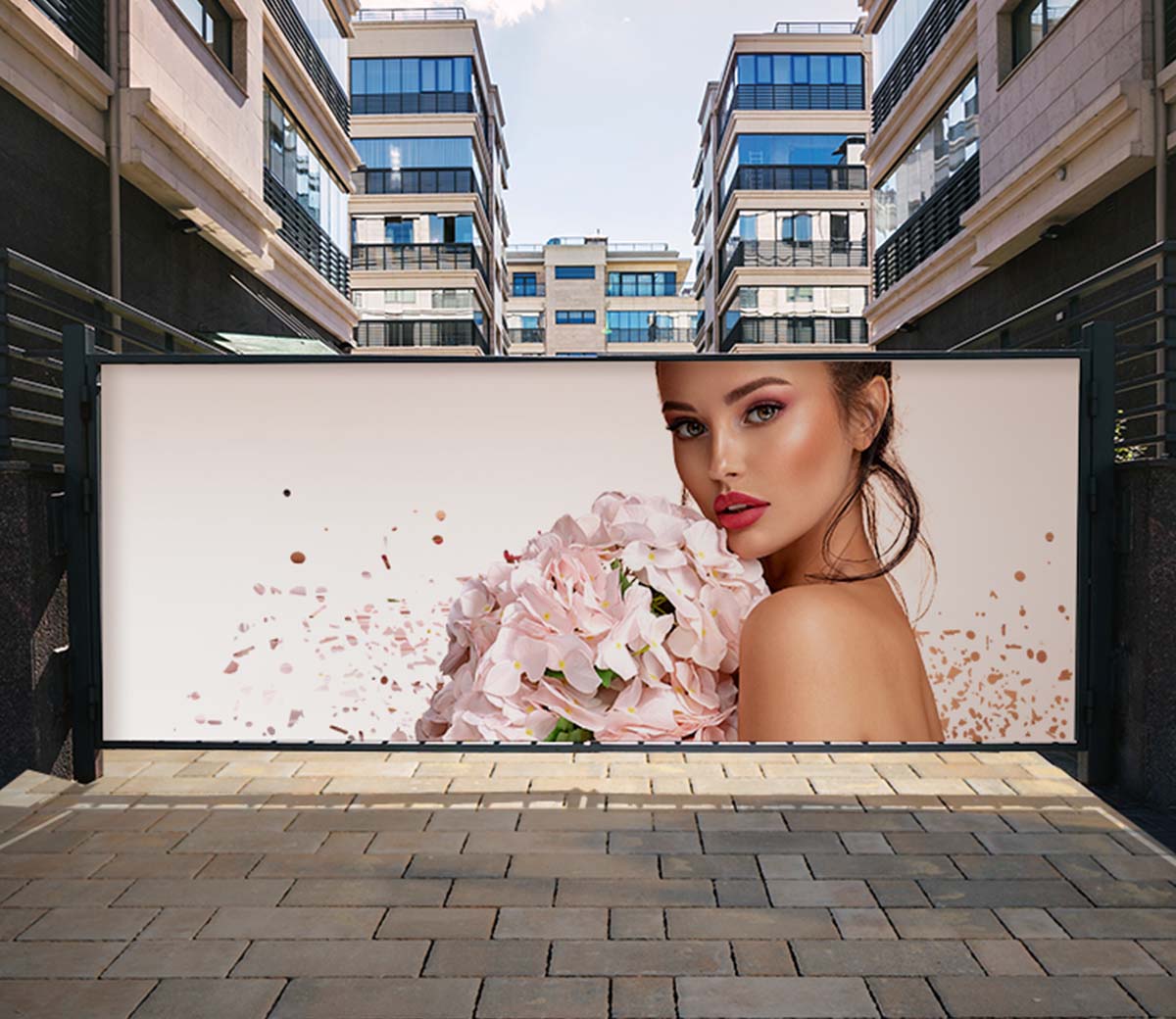
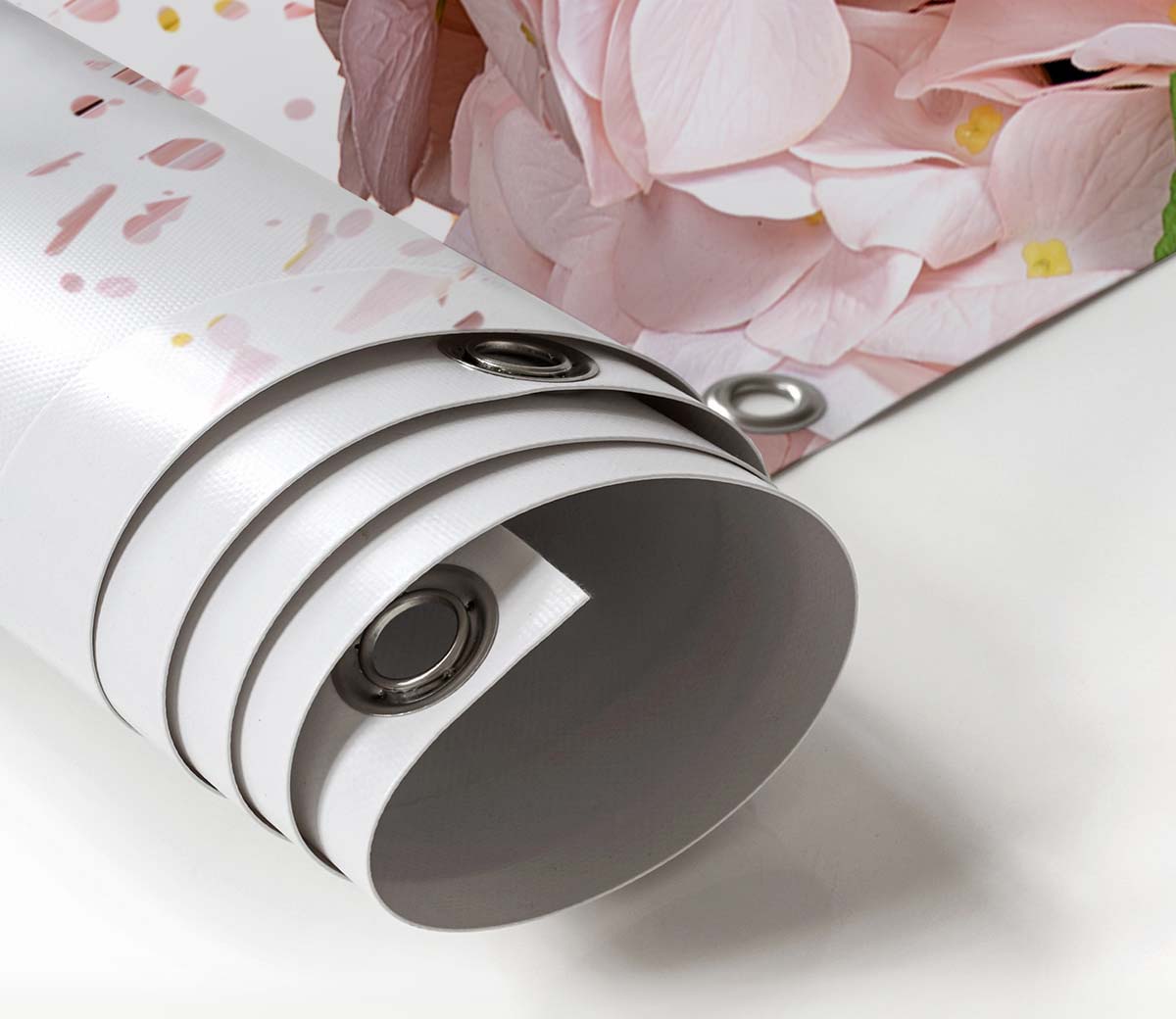

Frontlit banner
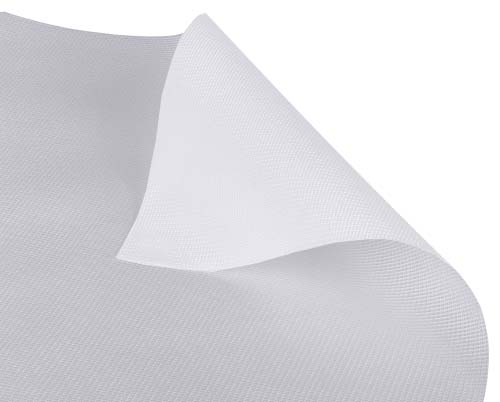
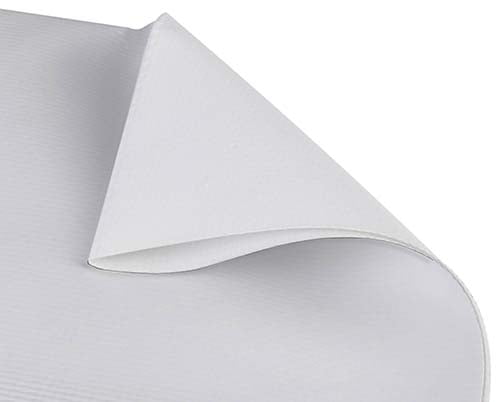
Frontlit banner is a popular material for large-format outdoor advertising on walls, fences, external systems and advertising carriers. It is a practical choice when you need a weather-resistant print with good colour reproduction and flexible finishing options. The material can be printed in UV or Solvent HR technology, cut to size, fitted with eyelets, welded, finished with keder, tunnels or Velcro, and produced in very large formats.
| Grammage | 450 g/m² |
|---|---|
| Printing technology | UV, Solvent HR |
| Colours | CMYK |
| Print resolution | 1000 dpi |
| Maximum material width | 5,00 m |
| Material attestation | B1, M1 |
| Finish of material | custom, cut to size, cut to size + eyelets, keder, Tunnel, Tunnel around, Tunnel Omega, Velcro, Welding + eyelets |
| Properties | Resistant to weather conditions |




Available finishes
Cut to size
Tunnel
Tunnel around
Tunnel Omega  Reinforcing tape
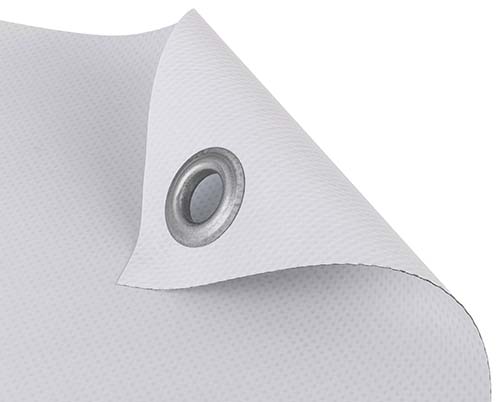
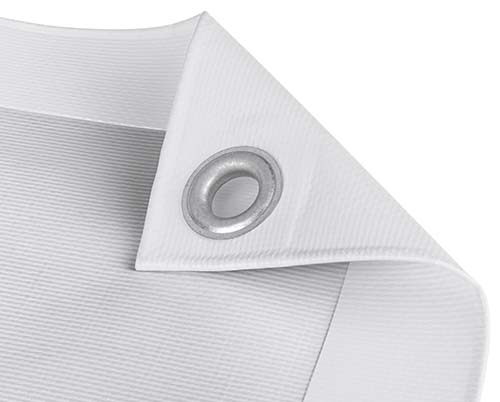
Welding + eyelets
Cut to size + eyelets
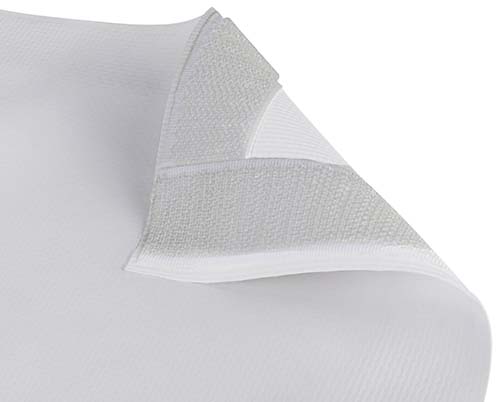
Velcro
Keder
Reinforcing tape
Welding + eyelets
Cut to size + eyelets
Velcro
Keder  Custom
 Frontlit Banner materials available in our offer
Frontlit banner is one of the most widely used materials for outdoor advertising and large-format promotional displays. It is designed for campaigns mounted on building facades, fences, external frames, temporary structures and other advertising carriers where visibility, durability and straightforward installation are important.
What makes Frontlit suitable for outdoor campaigns?
The material has a structure and surface prepared for exposure to changing weather conditions, including wind, rain and temperature changes. This makes it suitable for both short-term campaigns and longer outdoor displays, depending on the selected material type, finishing and installation method.
Frontlit is printed in CMYK using UV or Solvent HR technology, selected according to the format, application and production requirements. The print resolution of up to 1000 dpi supports clear advertising messages, readable colours and consistent reproduction of the supplied artwork.
Where can Frontlit be used?
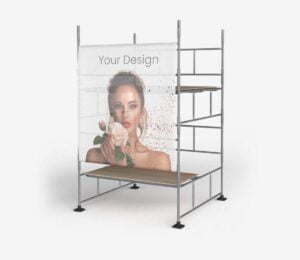
Frontlit is used wherever a durable and visible printed surface is needed. Typical applications include promotional banners on fences, advertising walls, building facades, event areas, road-side displays and exhibition structures. It is also suitable for large campaigns in urban spaces and high-traffic locations.
- outdoor advertising on walls, fences and frames,
- large-format promotional campaigns,
- event, trade fair and exhibition displays,
- advertising carriers requiring custom finishing.
How to choose the right Frontlit finish?
The finishing should match the place of installation, banner size, expected tension and mounting method. Frontlit can be supplied as cut to size, cut to shape, with welded edges and eyelets, with keder, tunnels, Tunnel Omega, Tunnel around or Velcro. For many fence and wall installations, welded edges with metal eyelets are a practical and commonly selected solution.
The maximum material width is 5.00 m. Larger formats can be produced by dividing the print into sections and joining them with welds, which allows the production of very large advertising banners while maintaining the required final dimensions.
Practical selection guidelines for Frontlit banners
When ordering Frontlit, start with the installation location. A banner mounted on a fence, facade or frame will require a different finishing method than a print stretched in a dedicated system or used in an exhibition structure. The final size, wind exposure, fixing points and expected campaign duration should all be considered before production.
Frontlit is often chosen for outdoor advertising because it combines a durable printed surface with a wide range of finishing options. In everyday market language, clients may also refer to this product as an advertising banner, custom banner, PVC banner or outdoor banner. These names are useful when describing the application, but the key product name remains Frontlit.
Finishing options and mounting
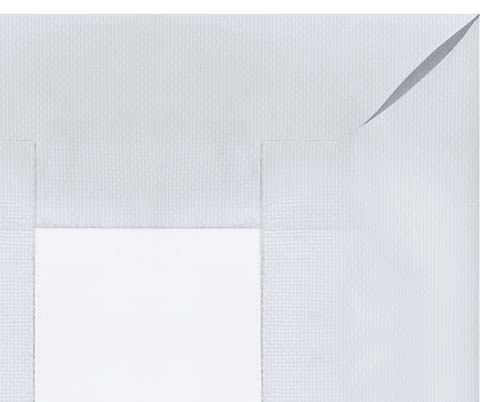
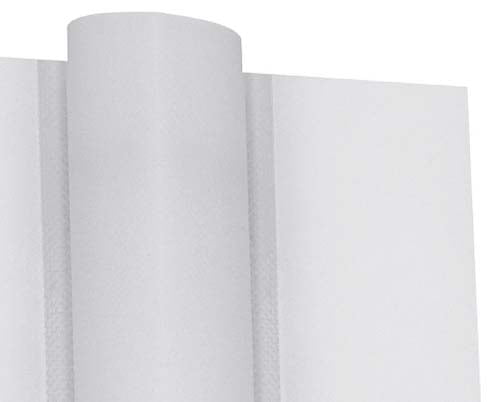
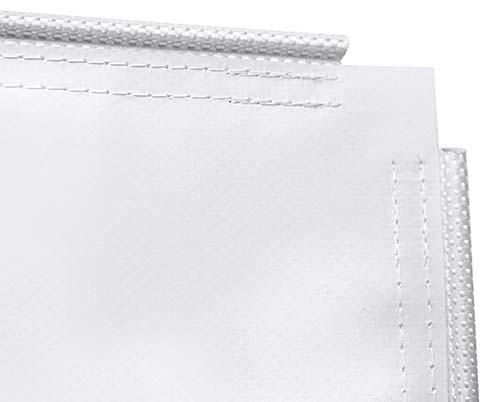
The most common finish is welding around the edges with metal eyelets. This solution helps reinforce the perimeter and makes installation easier on fences, walls and simple support structures. Keder is selected when the banner is to be inserted into a compatible profile system. Tunnels and Tunnel Omega are used when the print needs to be mounted on tubes, bars or tensioning systems. Velcro can be helpful for selected indoor or exhibition applications where quick installation and replacement are important.
- choose eyelets for direct fixing with ropes, hooks or cable ties,
- choose keder when the banner is mounted in a profile or rail system,
- choose tunnels when the print is installed on poles or tubes,
- choose Velcro for selected display systems and replaceable panels.
Artwork preparation and typical mistakes
Before preparing the file, check the required final size and finishing method. Important text, logos and QR codes should not be placed too close to the edge, especially when welding, eyelets, tunnels or keder are used. Keeping a safe area around the design improves readability and prevents key elements from being affected by finishing.
For rented advertising walls or external display systems, it is worth asking the operator for the exact print specification. The specification should include the visible area, final print size and required finishing. This reduces the risk of ordering a banner that is visually correct but not compatible with the mounting structure.
Coated, certified and PVC-free Frontlight options
For longer campaigns, coated Frontlit is often selected because it offers stronger functional performance than laminated alternatives and better resistance to outdoor conditions. For indoor exhibitions and projects where fire classification is required, Frontlit with M1 or B1 material certification can be used according to the requirements of the venue or market.
For projects where the specification requires a PVC-free material, PVC-free Frontlight is also available. It is offered in two weights – 200 g/m² and 320 g/m² – and is printed using UV technology. The material has a full surface and can be used for advertising banners, large-format graphics, signage, display systems, trade fairs and event applications.
What affects the final price?
The price of a Frontlit banner depends mainly on the size, number of pieces, selected material type, finishing method and delivery destination. Very large formats, additional reinforcement, keder, tunnels or special mounting requirements may influence production complexity, so these details should be confirmed before placing the order.