Tennis windscreen
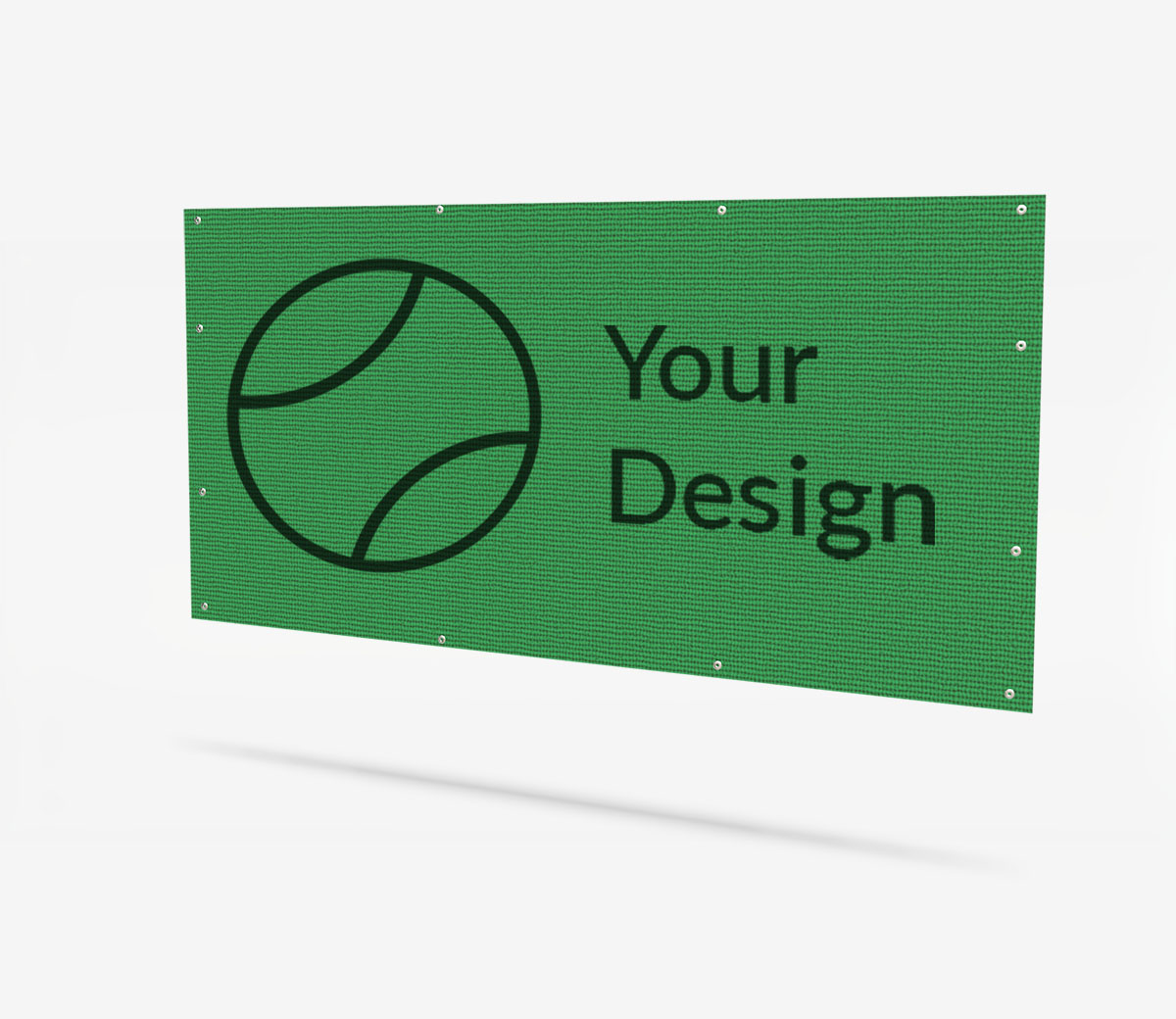
Tennis windscreen is an outdoor banner material for tennis courts and other sports areas, combining advertising space with practical wind and sun protection. The green 200 g/m² fabric supports ball visibility, lets wind pass through and resists tearing and stretching. It is printed in black using UV technology and can be finished with welded edges and eyelets for reliable installation on court fencing.
| Intended use | advertisement for tennis court or other sports area, shading net protecting tennis courts |
|---|---|
| Grammage | 200 g/m² |
| Printing technology | UV |
| Colours | Black |
| Print resolution | 600 dpi |
| Maximum material width | 2,20 m |
| Material attestation | Oeko tex, compliant with ISO 90001 standards |
| Finish of material | Welding + eyelets |
| Properties | improves tennis ball visibility on green backgrounds, protects from UV rays, protects from wind, which it also lets pass through, resistant to tearing and stretching |

Price from: €3,70 /m2



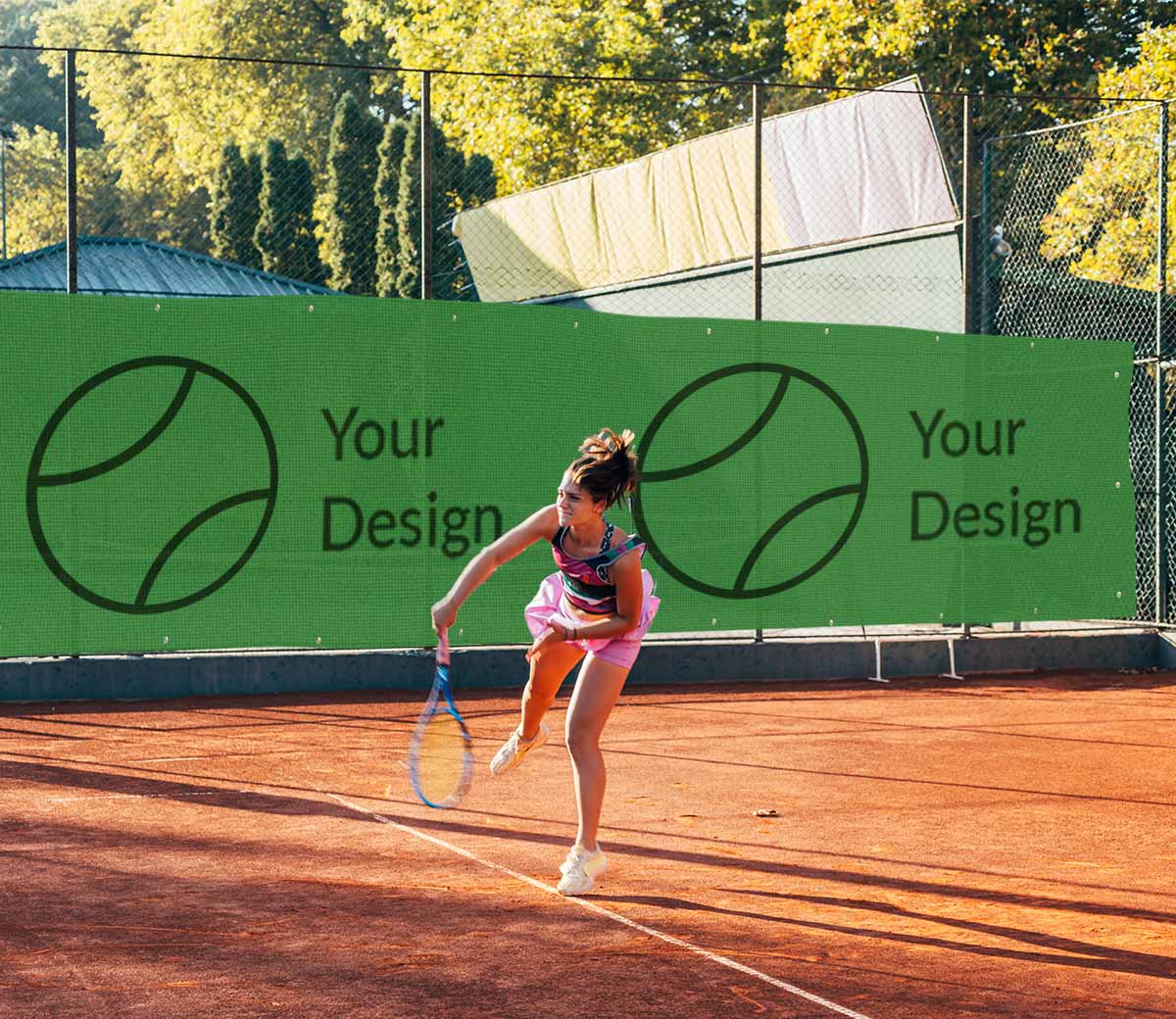
A tennis windscreen is designed for court fencing where the material has to do more than carry a logo or sponsor message. It helps reduce wind impact, provides shade, supports better visibility of the tennis ball against a green background and creates a consistent advertising surface around the sports area.
What the tennis windscreen is used for
This product is mainly used on tennis courts, but it can also be applied on other outdoor sports areas where a lightweight, durable and wind-permeable advertising banner is needed. The fabric is green, waterproof and resistant to tearing and stretching, so it is suitable for long-term exposure in outdoor conditions. Its structure allows part of the wind to pass through, which helps reduce stress on the fence and mounting points.
Print and material specification
The tennis windscreen is made from 200 g/m² material and printed in black with UV technology. The print resolution is 600 dpi, which supports clear sponsor markings, club branding and informational graphics. The product is a good choice when the design should remain legible while the screen continues to perform its practical function on the court.
Finishing and installation
The standard finishing is welding with eyelets, suitable for attaching the screen to fencing or other prepared structures. Welded edges strengthen the perimeter, while eyelets make installation easier and allow the material to be tensioned evenly. The maximum material width is 2.20 m, which should be considered when planning the final format and panel layout.
When to choose this product
- For advertising on tennis courts and sports facilities.
- When wind protection and partial shading are required.
- For green court surroundings where ball visibility matters.
- When a lightweight banner with practical outdoor resistance is needed.
When ordering a tennis windscreen, the most important decisions are the final size, the fixing method and the way the design will work on a green background. The product is intended for black UV print, so it is best suited to clear logos, text, sponsor panels and simple layouts with strong contrast. Very small details or low-contrast elements should be avoided if the screen will be viewed from a distance or during play.
Practical use on sports facilities
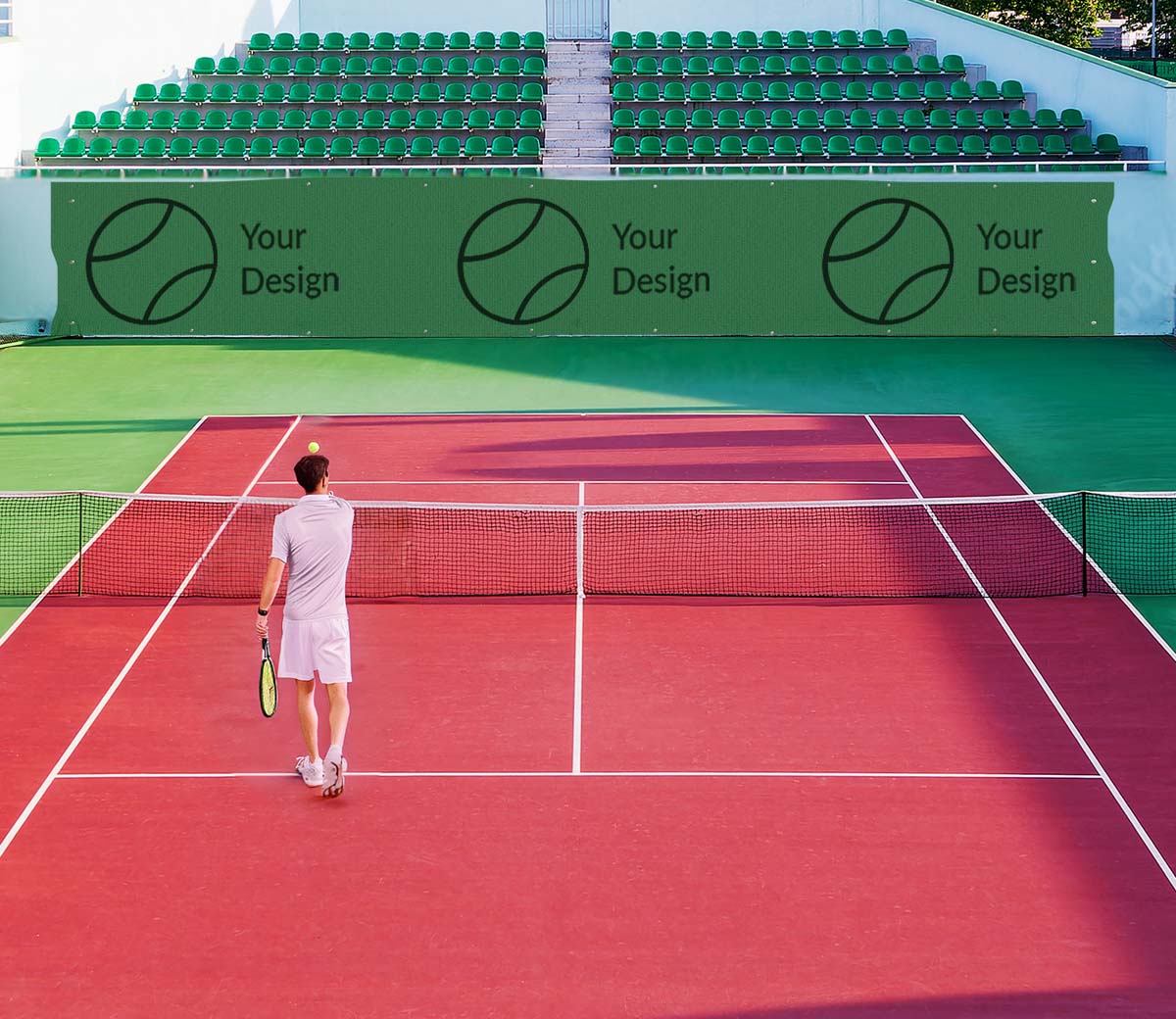
On tennis courts, the windscreen can act as a perimeter advertising medium, a visual separator and a functional shading net. It helps limit the effect of wind while still allowing air to pass through the structure. This is important on fencing, where a completely solid material could be exposed to higher wind loads. Customers also use this type of product around other sports areas where a durable outdoor banner and wind-permeable fabric are preferred.
How to plan the format and finishing
The maximum material width is 2.20 m, so larger installations should be divided into panels that match the fence sections and planned mounting points. Welding with eyelets is the standard finishing because it strengthens the edges and simplifies installation. Before production, it is worth checking the distance between posts, the available fixing points and whether the screen should be mounted as one long section or as several shorter panels.
File preparation tips
- Prepare the artwork at the ordered size or at a clearly defined scale.
- Use high-contrast black elements for better readability on the green material.
- Keep important logos and text away from edges and eyelet areas.
- Avoid overly fine lines if the design will be viewed from a distance.
- Plan panel divisions before placing repeated sponsor logos.
Common buying considerations
The tennis windscreen is often chosen when a facility needs advertising that also improves day-to-day court use. It is not only a printed banner; it also provides wind protection, UV protection and a more uniform green background. For this reason, it is used by tennis clubs, sports venues, event organisers and sponsors looking for visible branding in an outdoor environment.
In some markets, this product may also be described as a tennis court windscreen, court windscreen, tennis fence screen or shading net for tennis courts. These terms refer to similar applications, but the key specification for this product remains the green 200 g/m² material, black UV print, welded finishing with eyelets and use on tennis courts or comparable sports areas.
Material and compliance information
The material has Oeko tex approval and is compliant with ISO 90001 standards according to the product specification. These details may be important for professional buyers, sports facility managers and contractors who need documented material information for planned outdoor installations.