

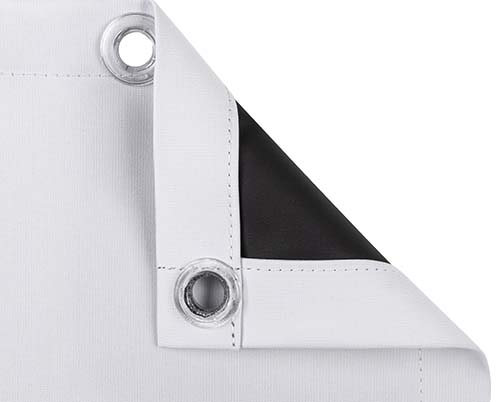
Blackback banner fabric
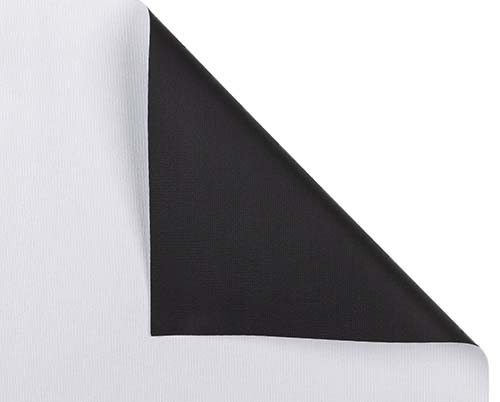
Blackback is a 250 g/m² polyester fabric for indoor advertising prints, exhibition stands and textile wall systems where light blocking and a clean visual finish are important. The black reverse side limits show-through and helps hide framing elements behind the print. It is suitable for personalised graphics produced in UV or sublimation technology, with B1 flame retardancy required in many trade fair and event spaces.
| Grammage | 250 g/m² |
|---|---|
| Printing technology | UV, Sublimation |
| Print resolution | 1200 dpi |
| Maximum material width | 3,20 m, 5,00 m |
| Material attestation | B1 |
| Finish of material | cut to size |
| Properties | 100% PES |

Price from: €10,90 /m2



Available finishes
Cut to size
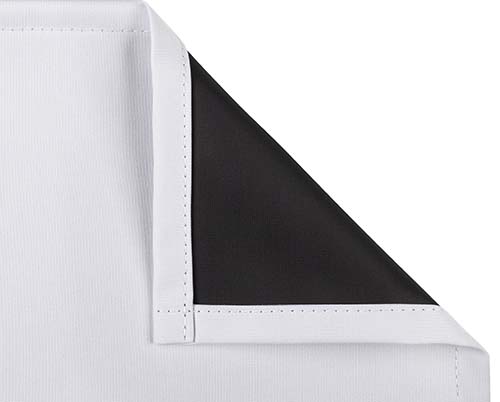
Stitched edges
Sewn in reinforcing tape + eyelets 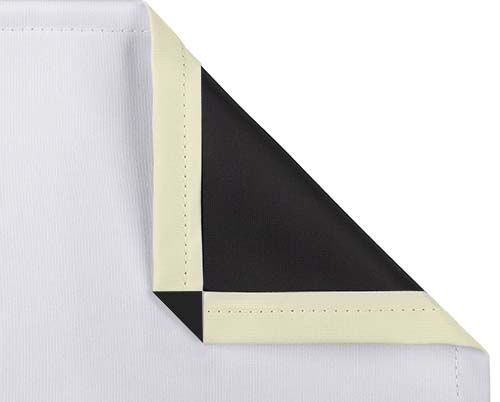 Silicon strip
  Custom
 Blackback is a 100% PES textile material designed for printed advertising displays, especially where the back side of the fabric must block light and separate the print from the structure behind it. The black reverse side improves opacity, reduces transparency and helps keep the front graphic clear when the material is mounted on exhibition walls, stand structures or textile frames.
What makes Blackback useful in display production?
The material combines the soft appearance of textile printing with practical light-blocking properties. With a weight of 250 g/m², it is stable enough for large-format applications while remaining suitable for finishing and installation in trade fair environments. It is often selected for unstructured or textile-covered constructions where profiles, supports or elements behind the print should not be visible from the front.
Blackback can be printed using UV or sublimation technology. Sublimation allows colour to penetrate the fabric fibres, supporting durable, saturated graphics. Printing is available at 1200 dpi, which is important for advertising layouts that include logos, text, product visuals or detailed brand elements.
Where is Blackback typically used?
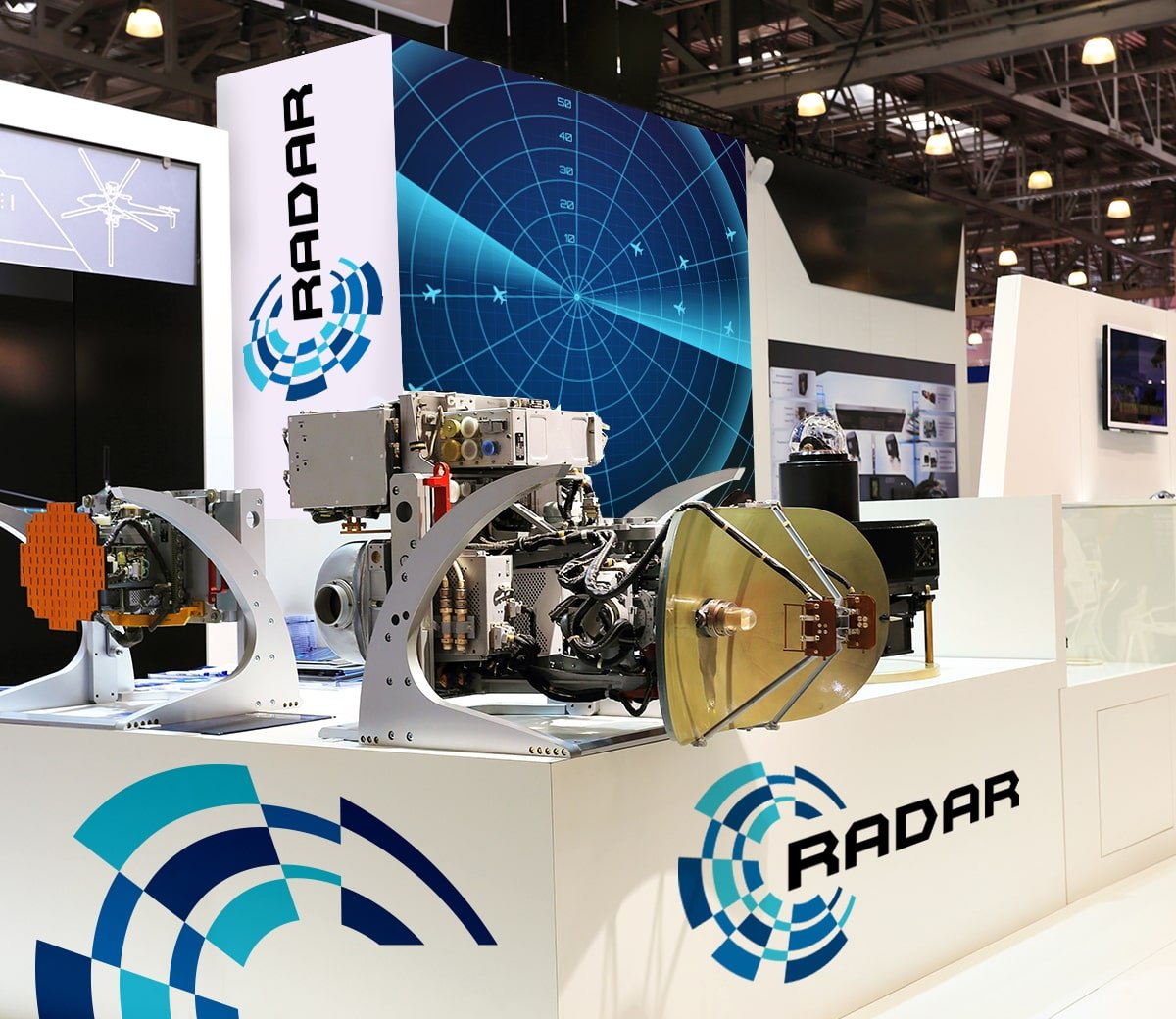
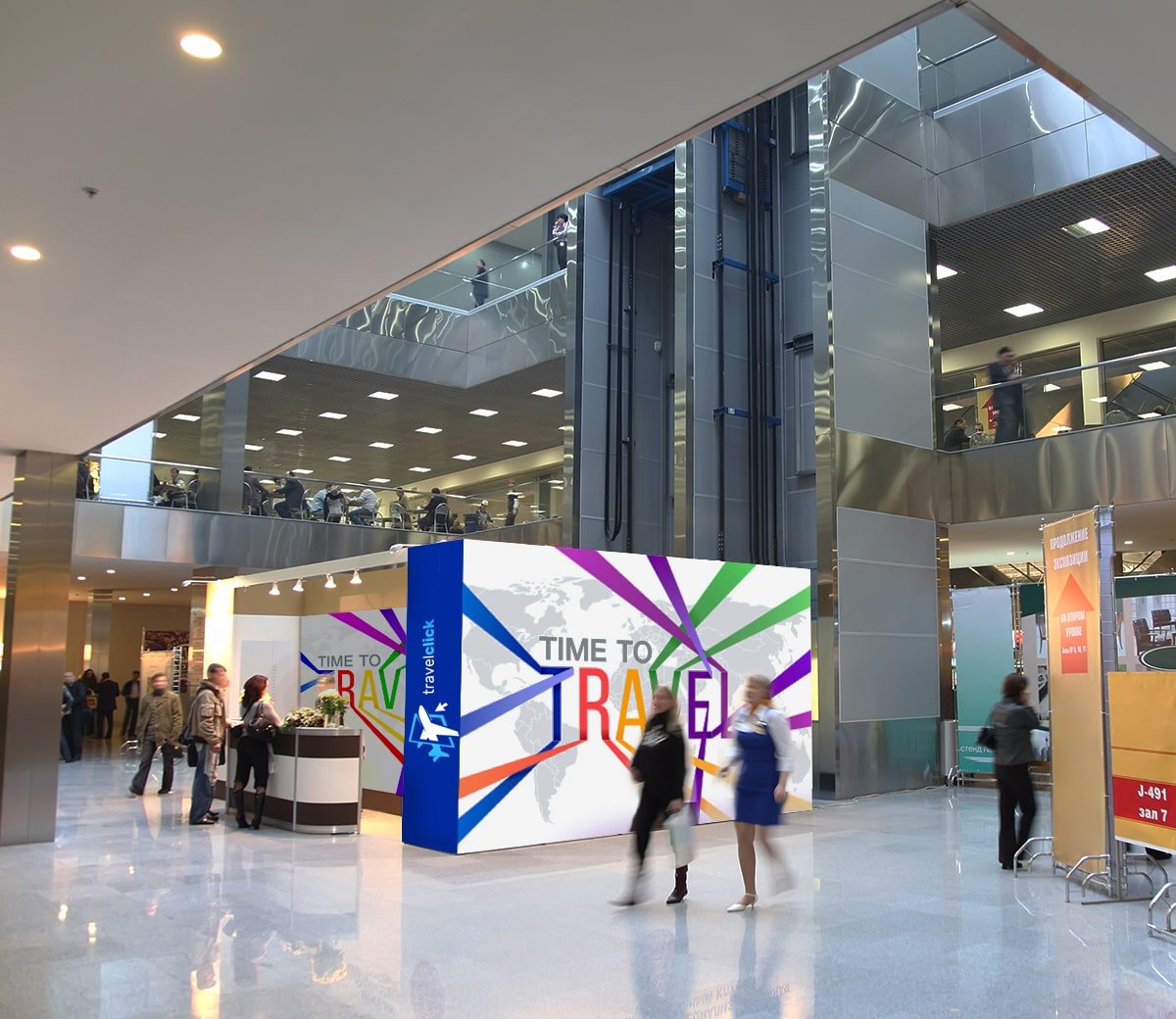
Blackback is intended mainly for indoor use. It is a practical choice for exhibition stands, fair walls, event branding, retail communication and interior graphic elements. It is also used in ZEN frame constructions, where textile graphics need to look clean and hide the construction behind the print.
- trade fair and exhibition wall graphics,
- textile prints for stand construction and ZEN frames,
- indoor advertising displays with limited show-through,
- brand communication where the reverse side should visually separate the print.
Material, width and finishing choices
Blackback is available in material widths up to 3.20 m and 5.00 m, supporting large-format production with fewer joins depending on the project size. The material has B1 flame retardancy certification, which is often required for trade fairs, events and public indoor spaces. Standard finishing includes cutting to size, with additional finishing methods selected according to the mounting system and project requirements.
How to choose Blackback for a project
Blackback is worth choosing when a textile print must cover or separate what is behind it. In practice, this is important on stand walls, display frames, partition structures and event installations where the construction, lighting or another print could otherwise affect the appearance of the front graphic. The black reverse side improves visual separation and helps maintain a consistent advertising message.
In customer requests, Blackback may also be described as a black back banner, blackout polyester fabric or textile banner with a black reverse side. These names usually refer to the same need: a printed fabric with stronger opacity than standard textile media. The main product name remains Blackback, and the final choice should be based on the planned installation, print size and finishing method.
Printing technology and graphic preparation
Blackback can be produced using UV or sublimation printing. Sublimation is often selected for textile applications because it integrates the colour into the polyester fibres, while UV printing may be chosen depending on production requirements and the expected visual result. In both cases, the file should be prepared with the final installation in mind.
- Keep important text, logos and key visual elements away from sewing, cutting and finishing areas.
- Prepare artwork at the final scale or according to production guidelines for large-format printing.
- Use sufficient contrast for text and brand elements, especially for trade fair viewing distances.
- Check whether the print will be installed flat, tensioned in a frame or finished with eyelets or reinforced edges.
Finishing and installation considerations
The basic finishing option is cut to size. Depending on the project, the fabric can also be prepared with sewn edges, reinforcing tape or eyelets if the installation method requires it. The correct finishing should be selected before production, because it affects the safe area of the design and the final dimensions of the visible graphic.
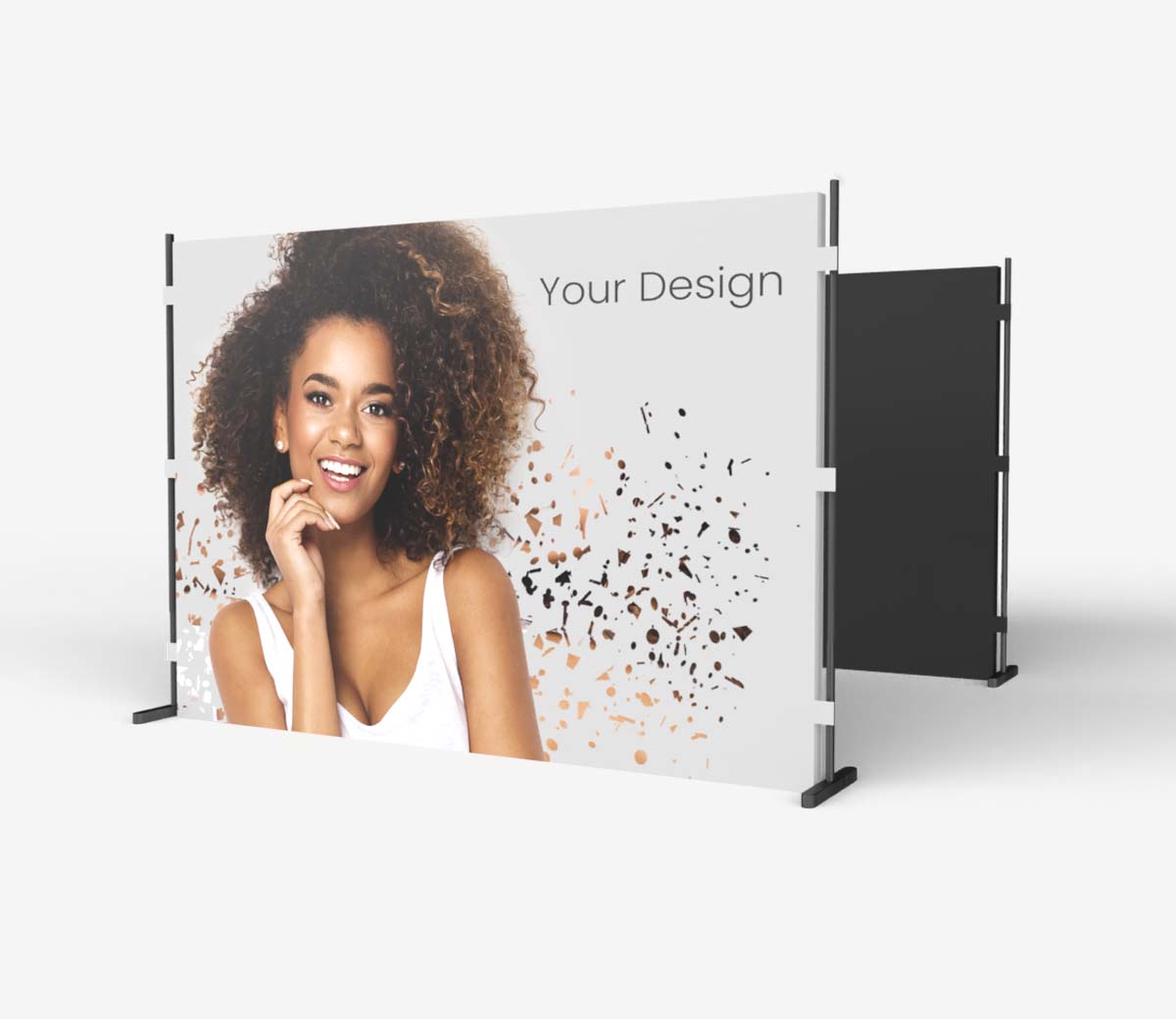
For frame systems and fair walls, it is important to confirm the mounting method and required tolerance before preparing the print file. If two separate prints are combined back-to-back, Blackback can help create two different communication sides while limiting visual interference between them. This can be useful in open exhibition spaces, walkways or stand constructions visible from more than one direction.
Common ordering mistakes to avoid
The most frequent issues are placing key elements too close to the edge, choosing a finish without considering the mounting system, or treating the fabric as if it were a standard frontlit material. Blackback is selected for its textile look and black separating layer, so it works best where opacity and indoor presentation quality are more important than outdoor exposure.
Before ordering, define the final size, place of use, expected viewing distance, finishing method and whether the print will be installed in a frame, on a wall or as part of a stand structure. This makes it easier to choose the correct production setup and prepare a file that will remain readable after finishing.