



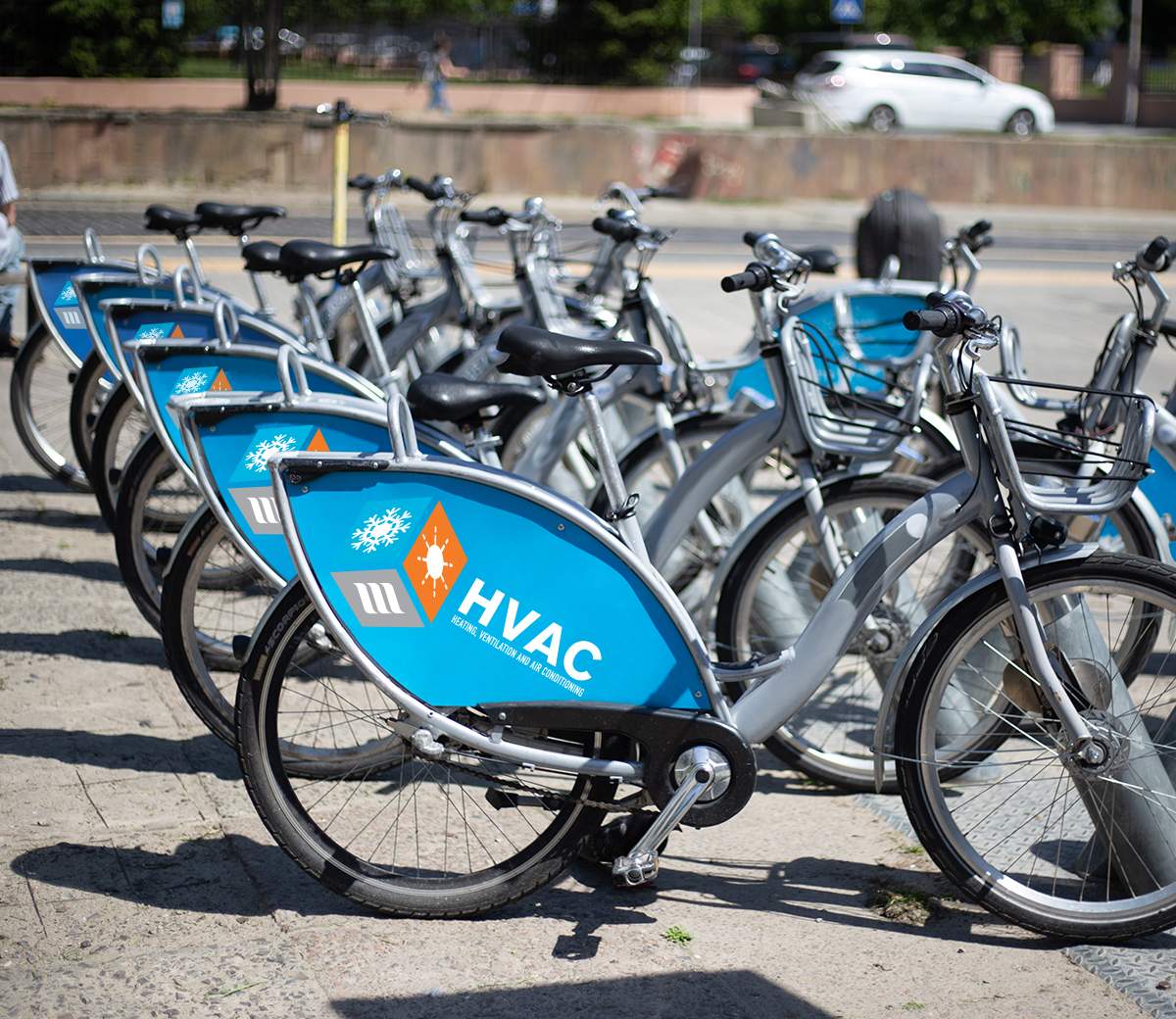

Polypropylene board
Polypropylene board is a lightweight, rigid advertising board for indoor and outdoor signs, election posters, construction site information and temporary promotional displays. It is a practical choice when you need an economical material that is easy to process, mount and replace after a campaign. UV printing provides durable, water- and sunlight-resistant graphics, while available thicknesses and board structures help match the material to the intended use.
| Types | Carrex, Carrex honeycomb |
|---|---|
| Printing technology | UV |
| Board format | 2,05 m x 3,05 m, 3,00 m x 2,00 m |
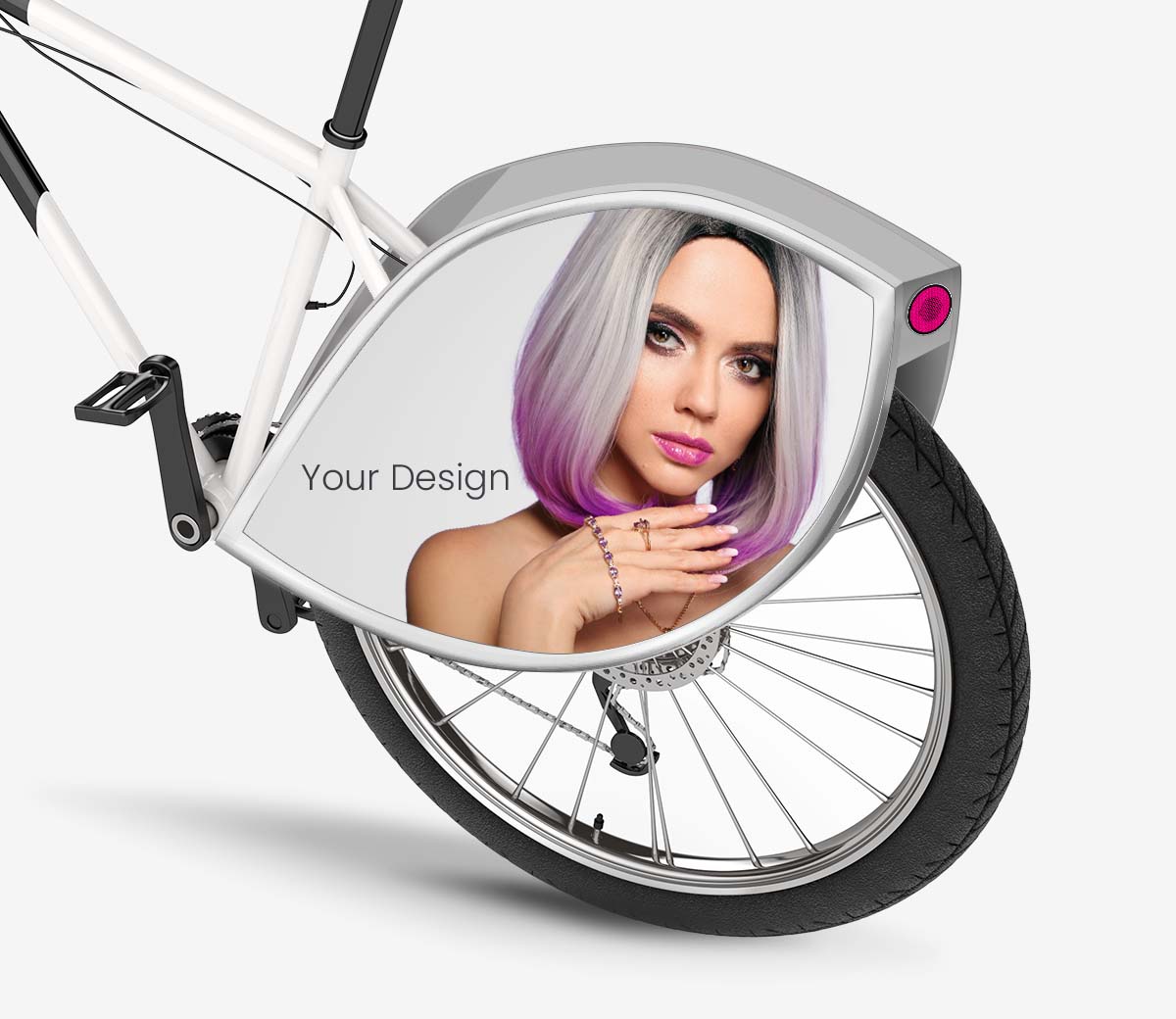
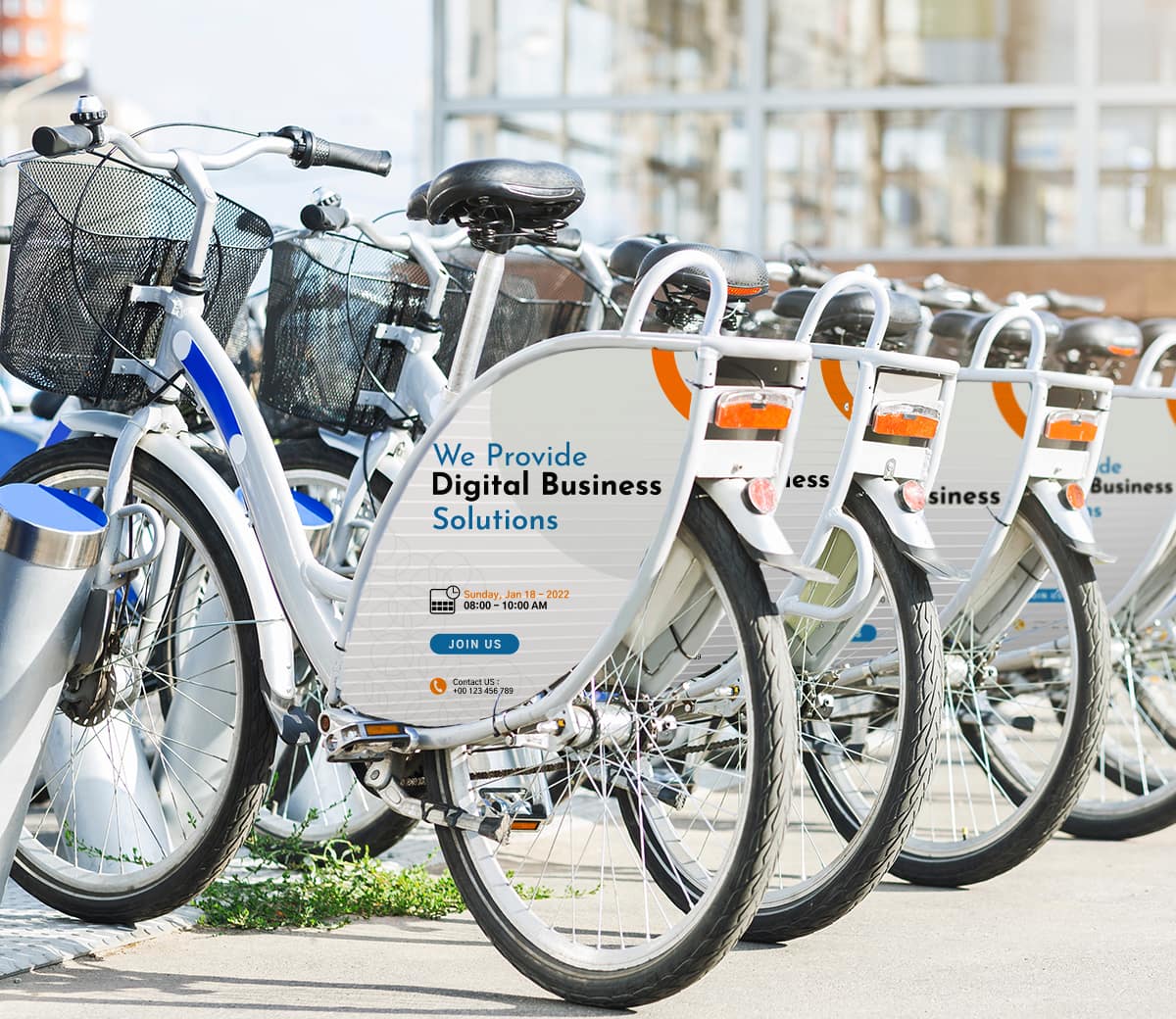
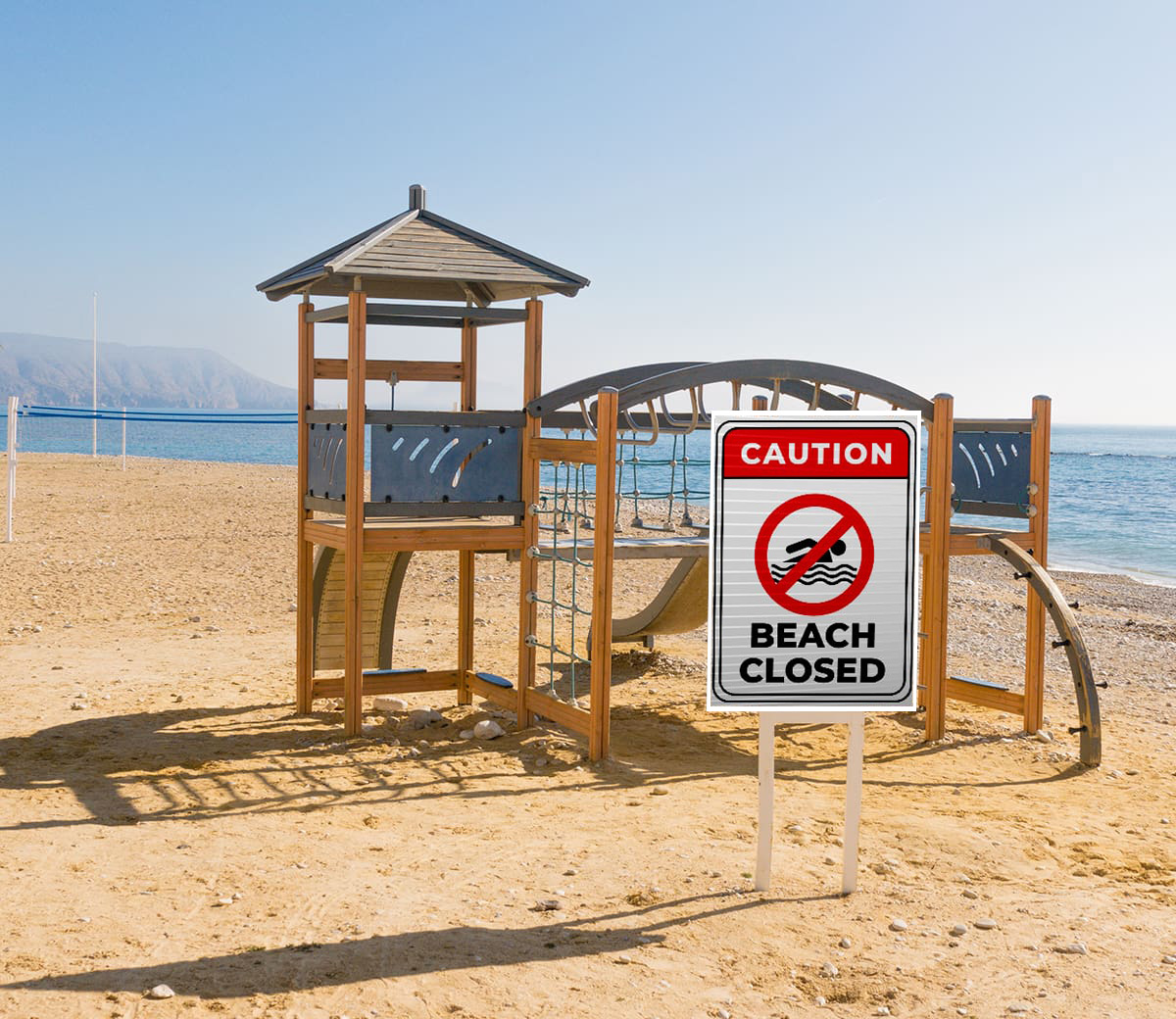
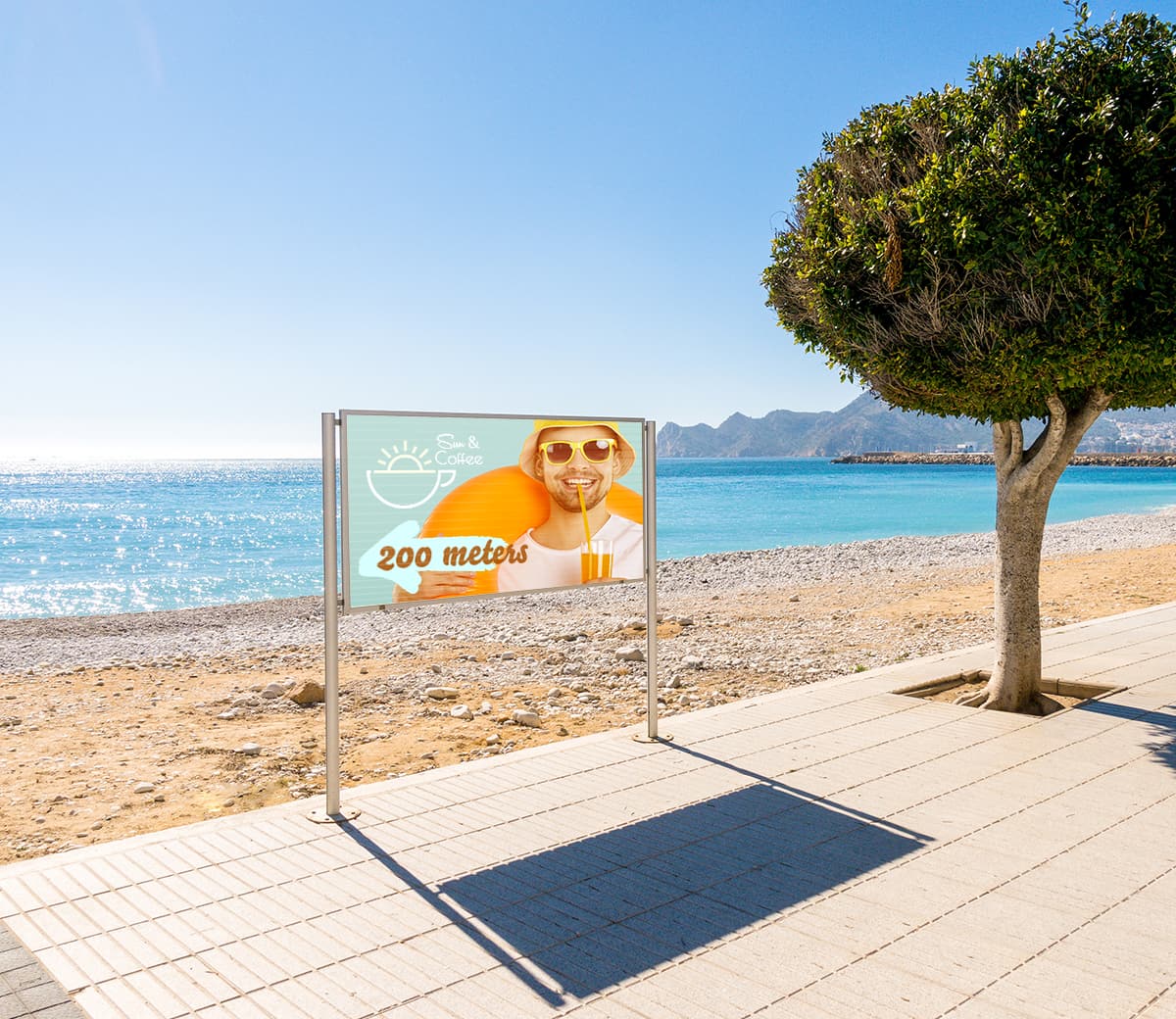
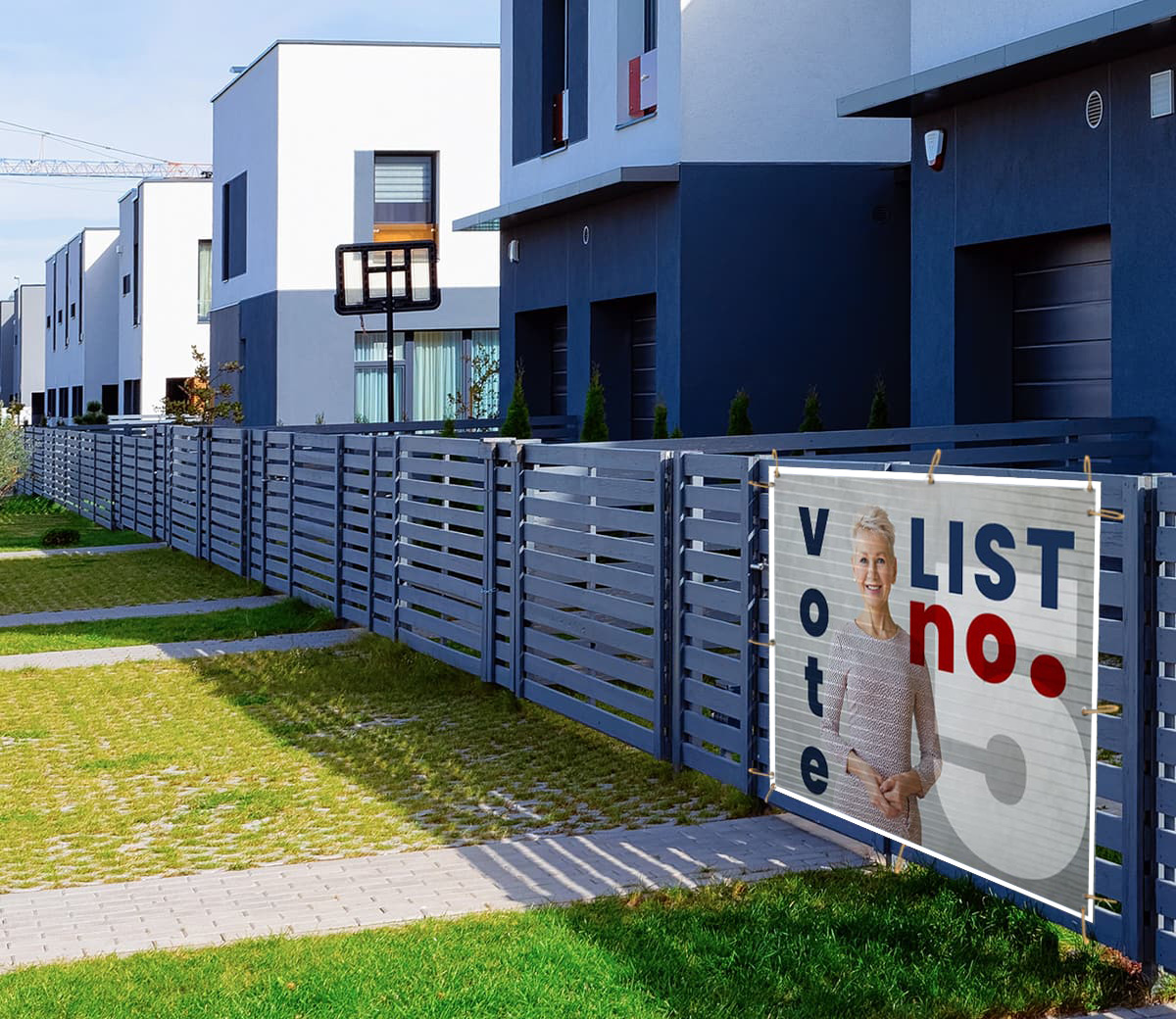
| Intended use | Indoor and outdoor, mobile advertising for bicycles, promotional overlays, racks, election posters, advertising at summer festivals and events, construction site signs |
| Thickness | 3 mm, 5 mm, 10 mm |
| Finish of material | the material is rigid and resembles cardboard in its structure, its advantage is that it is easy to process and can be cut to any shape, in addition, once the channels have been cut, the board can be creased, allowing it to be bent |

Average price: €7,00 /m2


Polypropylene board available in our offer
Polypropylene board is a rigid plastic board used for advertising, information and promotional applications where low weight, quick installation and good resistance to outdoor conditions are important. It is often selected for short-term and medium-term campaigns, including election materials, event signage, construction site boards, bicycle advertising and promotional overlays.
What makes polypropylene board practical?
The material combines a light structure with useful stiffness, which makes it easier to transport, process and mount than many heavier board materials. It can be installed with tape, glue or nails, and it can also be fixed to fences or lampposts with zip ties. This makes it suitable for both indoor displays and outdoor locations where fast mounting is required.
Printing is carried out with UV technology at 1000 dpi. The printed surface is resistant to sunlight and water, so the graphics remain suitable for outdoor exposure in typical advertising and information applications. Designs can be printed in any colour, which allows the board to be adapted to campaign branding, warning messages or wayfinding systems.
Typical applications
- election posters and campaign boards,
- construction site signs and information boards,
- promotional graphics, overlays and display elements,
- advertising on bicycles and mobile carriers,
- racks, stands, billboards and simple spatial forms,
- advertising for summer festivals, events, restaurants and cafés.
How to choose the right option?
Polypropylene board is available in Carrex and Carrex honeycomb types, with thicknesses of 3, 5 and 10 mm depending on the selected structure. The 3 mm board is the most economical option in the range and is well suited to short-term campaigns, including elections and information actions. Thicker boards are worth considering when greater rigidity or a more robust display element is required.
Available board formats include 2.05 m x 3.05 m and 3.00 m x 2.00 m. The material can be cut to shape, and after partial cutting of the channels it can be creased and bent, which is useful for producing simple three-dimensional forms, boxes and display components.
When planning polypropylene board production, the most important decision is the combination of structure, thickness, mounting method and expected exposure time. The board is often chosen when paper or cardboard would be too sensitive to moisture, while heavier materials such as PVC, Hips or Dibond would be unnecessary for the project.
Carrex or Carrex honeycomb?
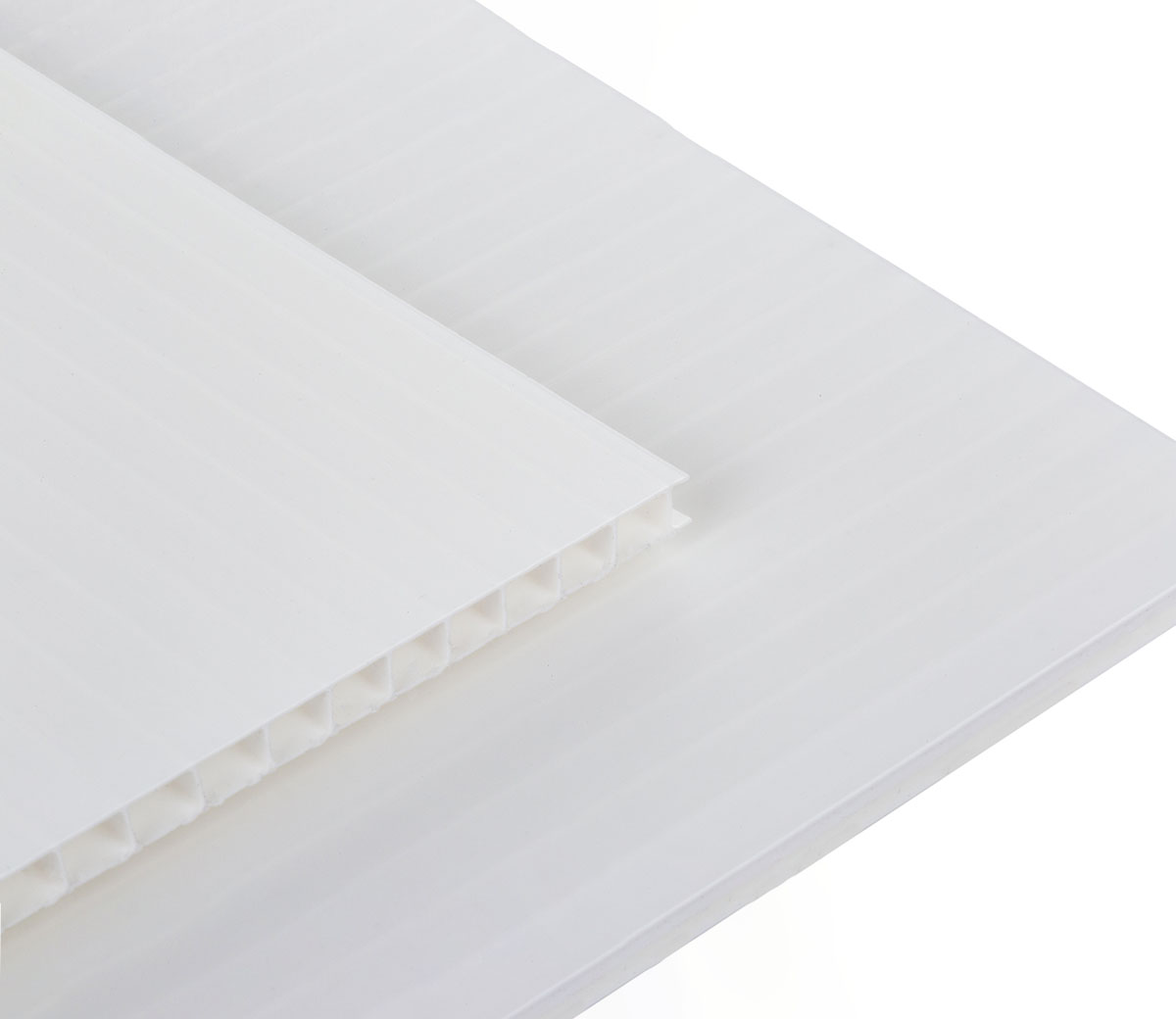
Carrex polypropylene board has a channel structure and a slightly corrugated surface. It is an economical material for information boards, pavement stoppers, advertising panels and simple spatial forms. The channel structure also allows the board to be partially cut and bent, which helps in creating folded elements or lightweight display shapes.
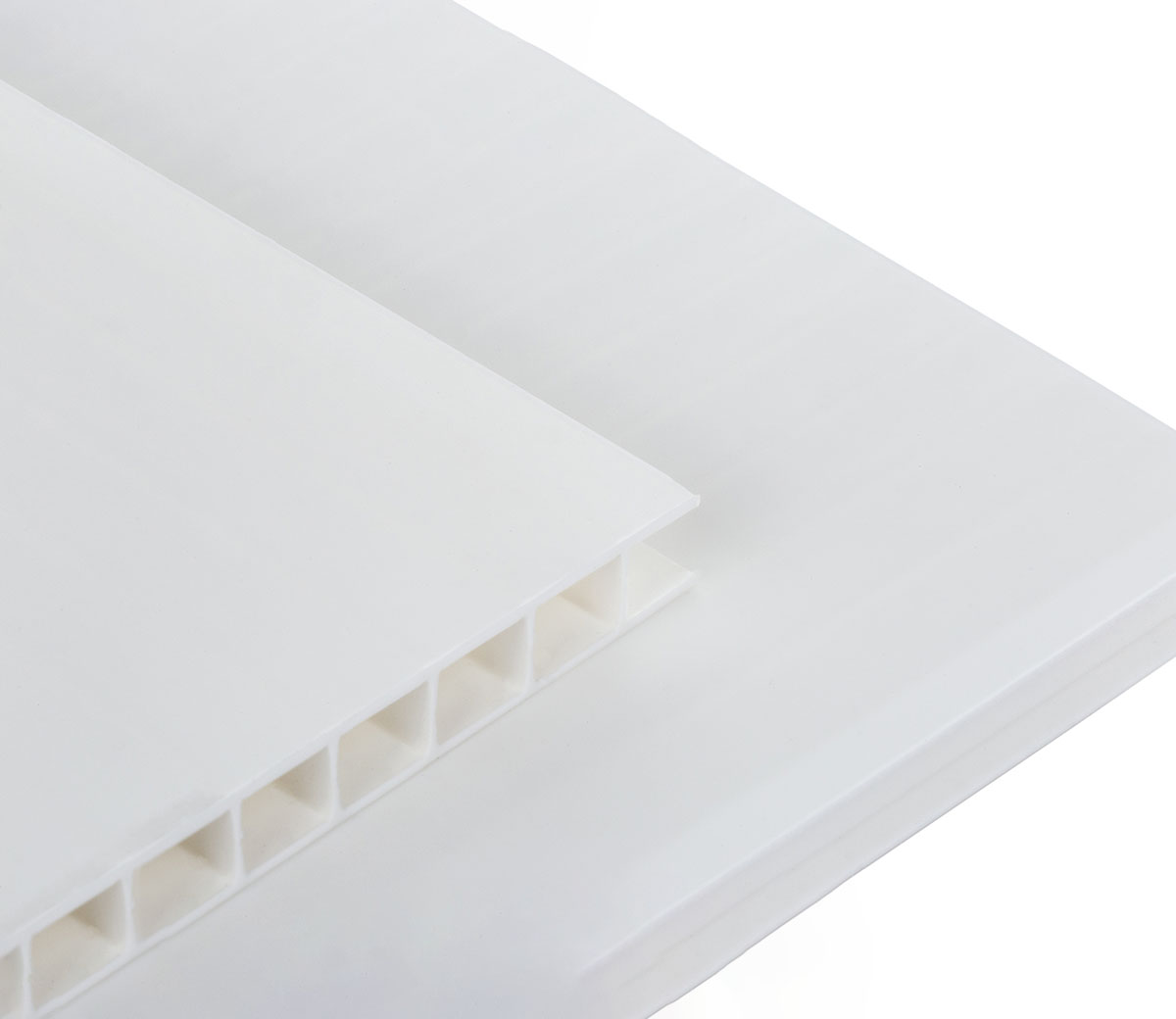
Carrex honeycomb polypropylene board has a cellular, honeycomb-like internal structure and a smooth surface. It is useful for projects that require cutting to more complex shapes, and it can be printed on both sides. Its low weight is a key advantage when compared with many other rigid board materials used in visual communication.
Buying and production tips
- Choose 3 mm board for economical, short-term campaigns such as election posters or temporary information boards.
- Consider 5 mm or 10 mm thickness where the board needs more rigidity or will be used as a larger display element.
- For double-sided communication, check the honeycomb polypropylene option, as it offers a smooth surface and can be printed on both sides.
- Plan the mounting method before production: tape, glue, nails and zip ties require different placement and handling on site.
- If the board will be cut to a custom shape, keep important text and logos away from the cutting line.
Preparing artwork for polypropylene board
For advertising and information boards, clarity is more important than visual complexity. Large text, strong contrast and a clean layout help the message remain readable from the intended viewing distance. This is especially important for construction site signs, election materials, outdoor event advertising and mobile bicycle advertising.
Because the material can be cut and creased, it is worth marking cutting, bending or folding expectations clearly in the production specification. If the board is to be attached with zip ties, holes or fixing points should be planned so that they do not interfere with key content. For boards mounted outdoors, leave enough space around important elements to avoid covering the message during installation.
Alternative names used by customers
Polypropylene board is also commonly referred to as PP board, channel polypropylene board or cellular polypropylene board. These names usually describe the same general category of lightweight plastic boards used for printed advertising, signage and temporary displays. The final choice should be based on the required structure, thickness, surface type and whether one-sided or two-sided printing is needed.