Semaphore light box
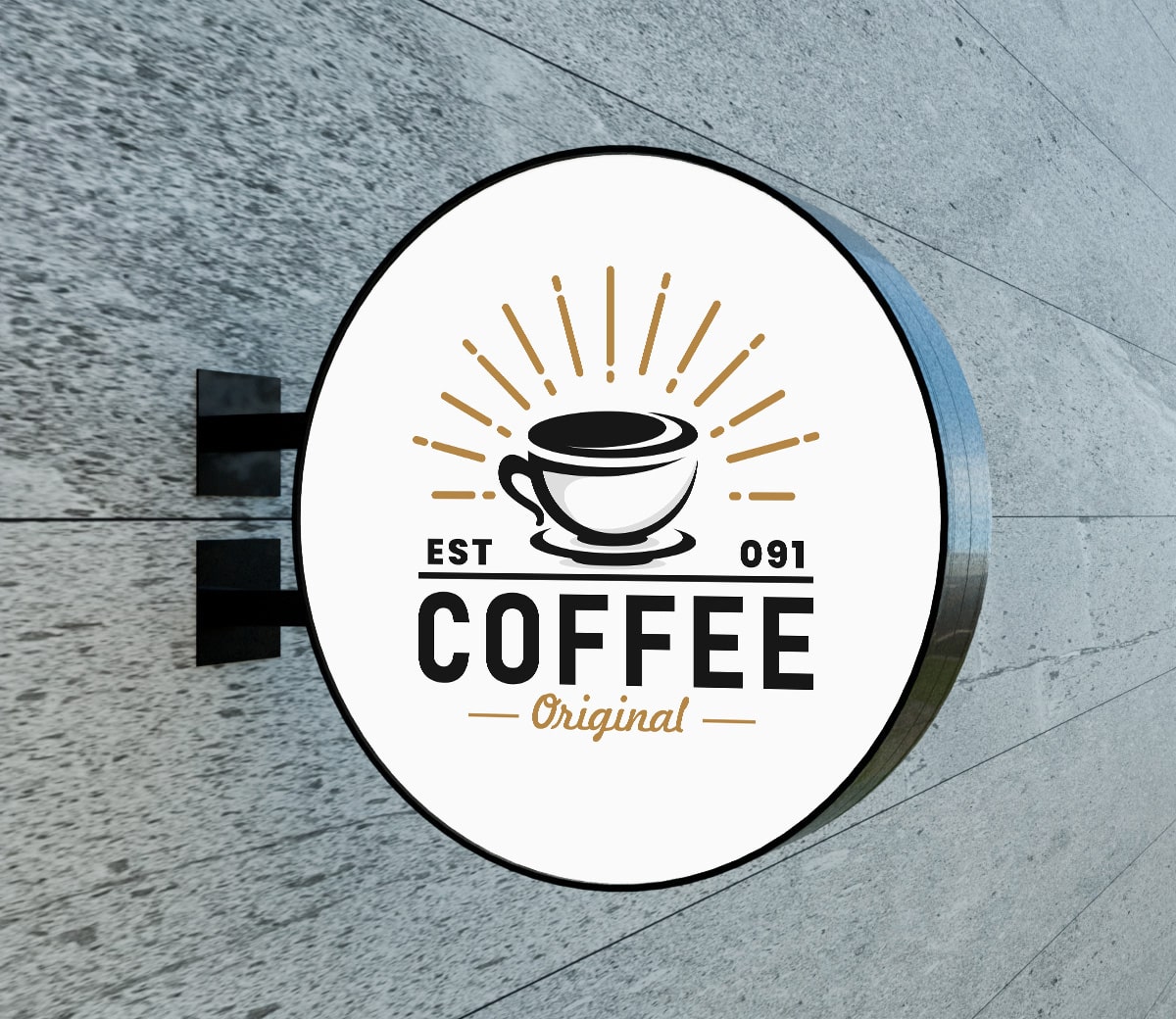
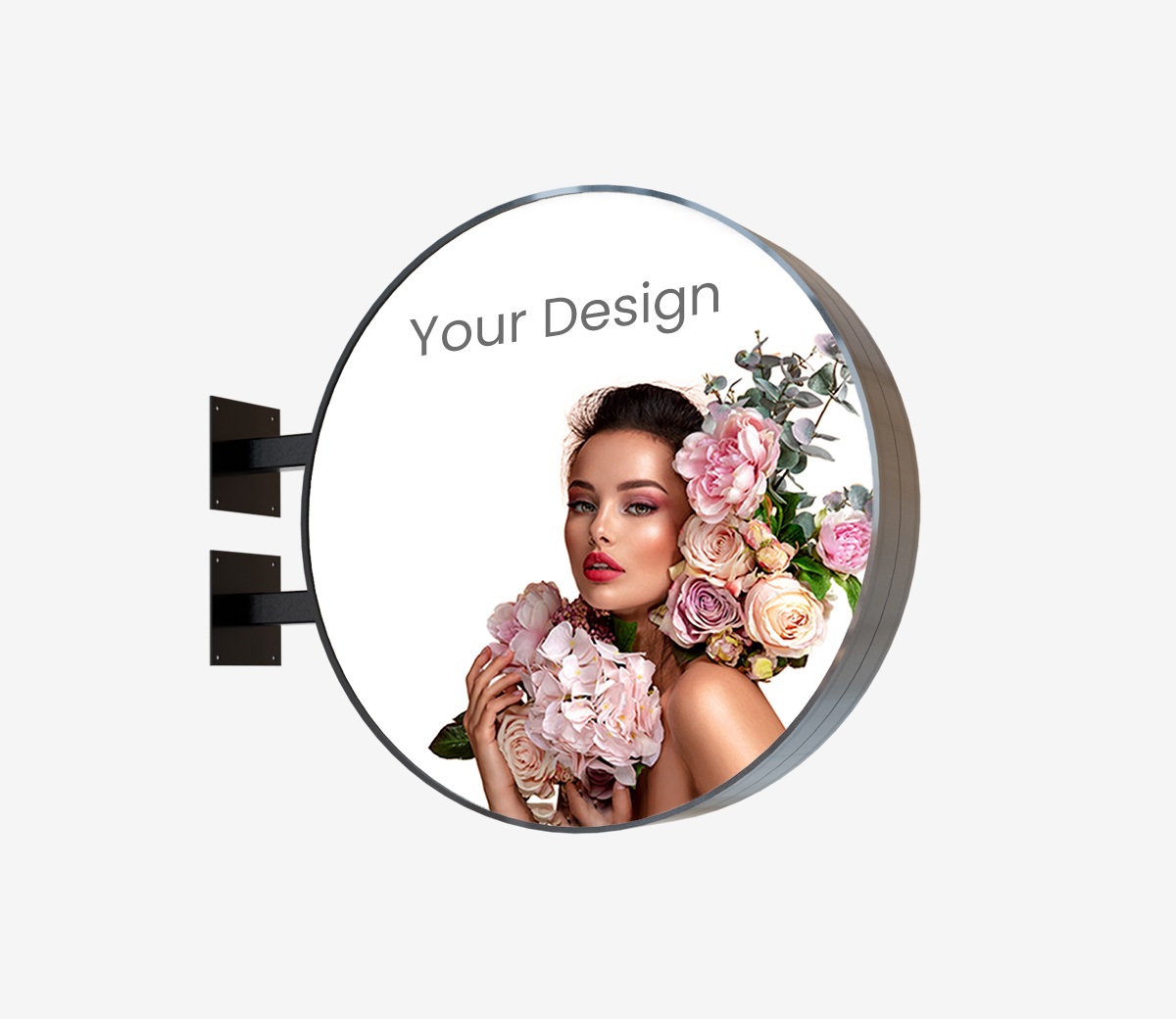
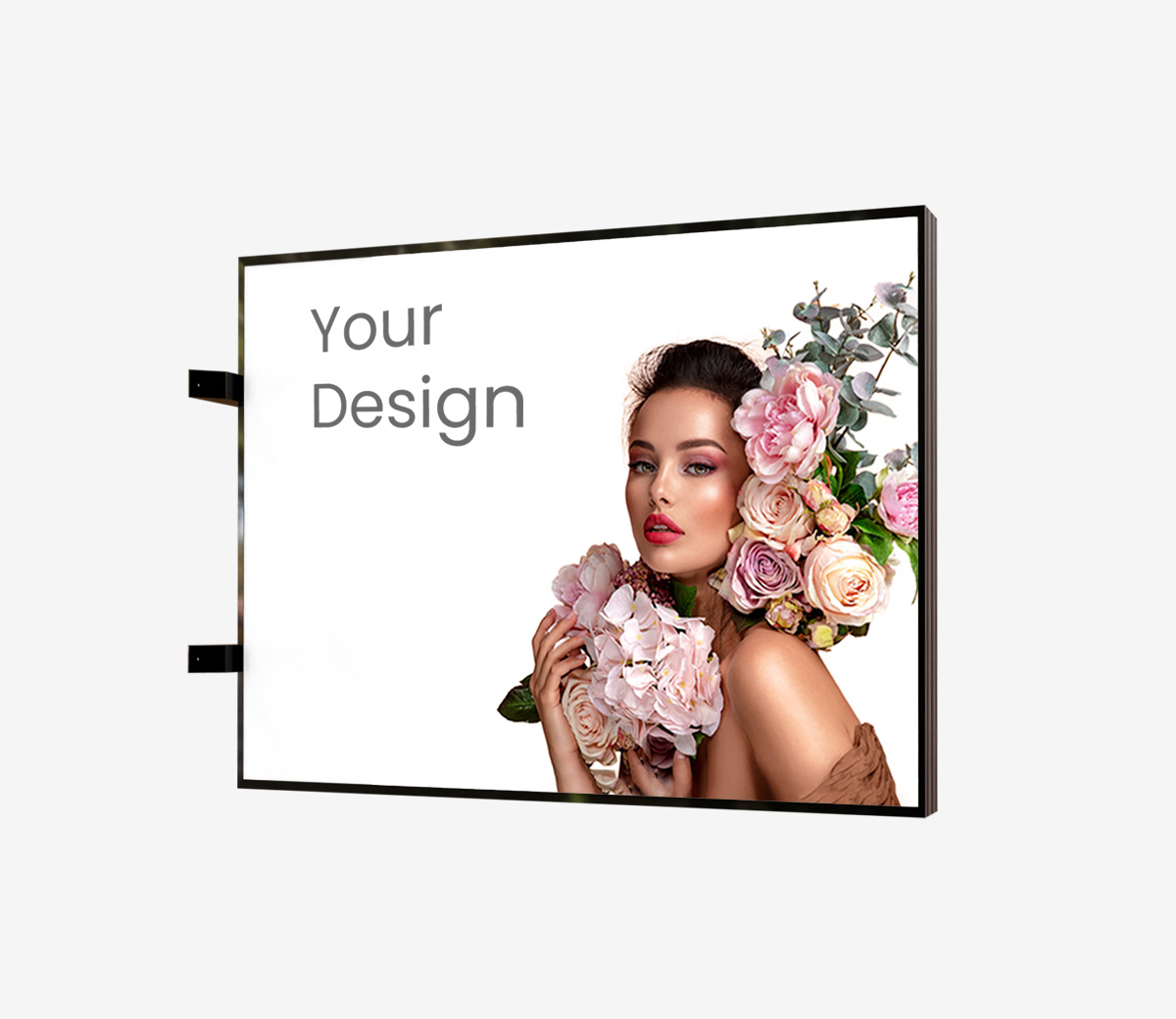
The Semaphore light box is a projecting illuminated sign for clear business identification on facades, in corridors and at customer-facing locations. Mounted perpendicular to the wall, suspended from the ceiling or placed on the ground, it improves visibility from both directions and helps pedestrians or drivers locate a shop, office, restaurant, clinic or service point more easily.
| Intended use | two-sided company signboard |
|---|---|
| Construction | mounting feet, Plexi board |
| Lighting | LED |
| Lighting method | edge lighting |
| Light colour | 6500 – 7500 K |
| Minimum size | 20 x 20 cm |
| Maximum size | 200 x 100 cm |
| IP Ratings | IP67 |
| Properties | advertising & decoration, the possibility of using different lighting colours and the flashing effect, visibility from both sides |
| Important information | The product is priced individually |


Mounting methods assembly
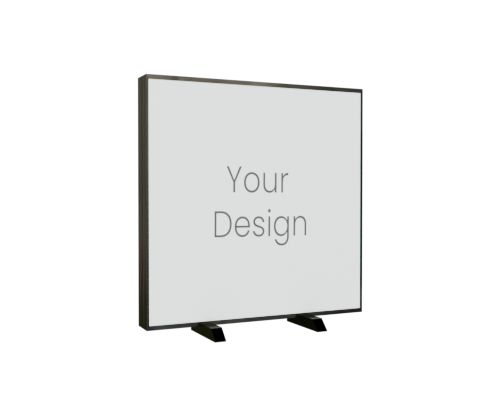 Freestanding
 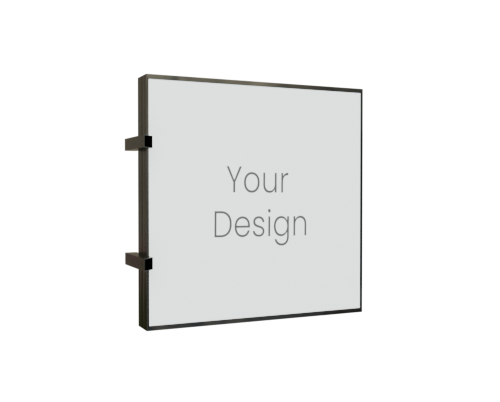 Perpendicular to the wall
 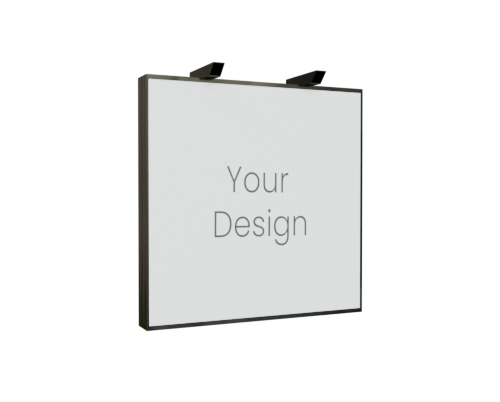 Suspended
 Variants of semaphores


Profile types


for bending

for bending
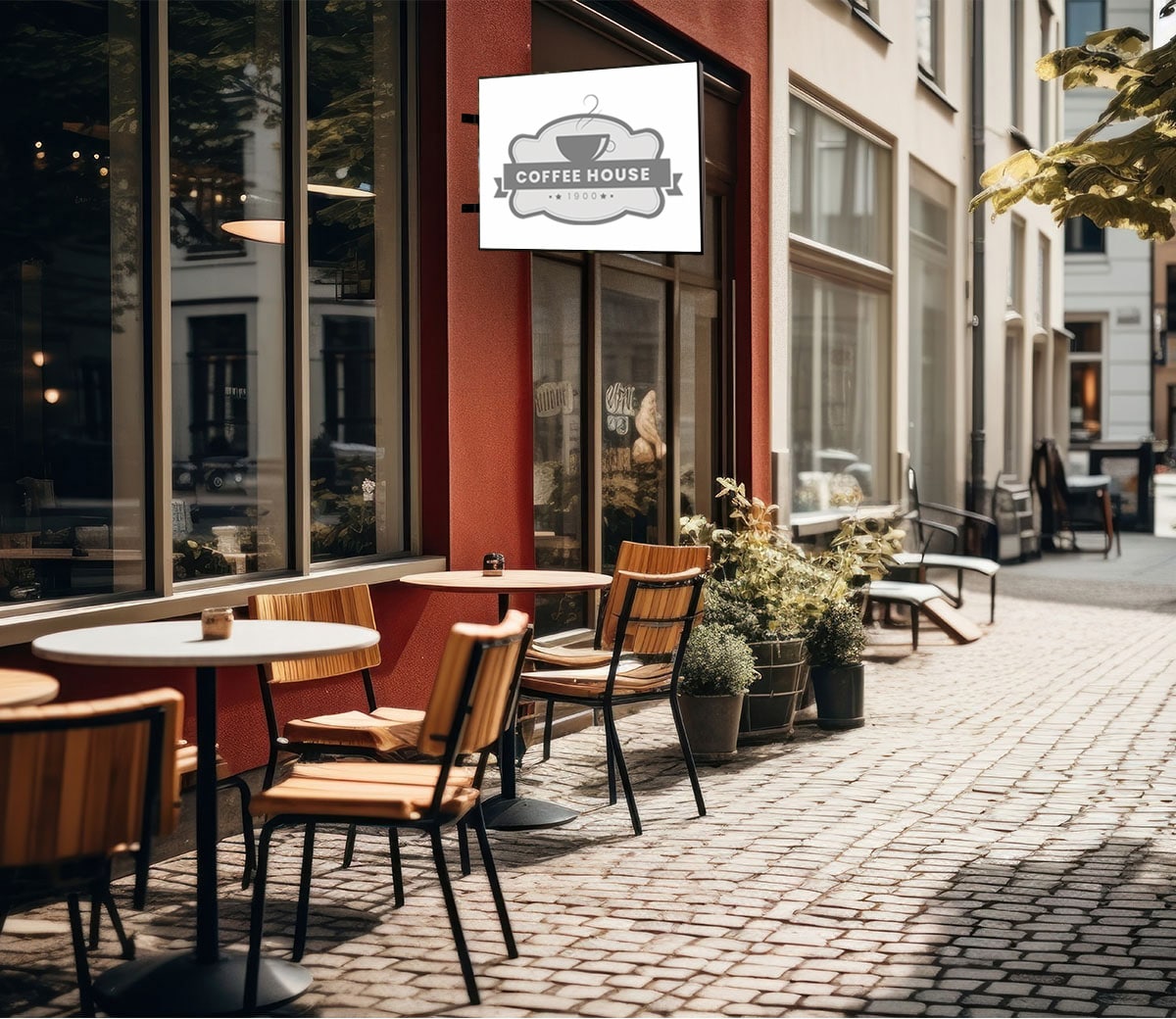
The Semaphore light box is a spatial advertising carrier designed for visible company signposting in places with pedestrian or vehicle traffic. It is most often used as a two-sided company signboard mounted on an extension arm to a facade, so the message can be seen from both directions. This makes it useful where a flat wall sign would be less noticeable, for example on busy streets, in shopping malls, hotels, medical centres, offices, showrooms, restaurants and service points.
What makes the Semaphore useful in daily exposure?
The product combines an aluminium profile structure with a Plexi board and LED edge lighting. This construction supports good readability after dark while keeping the form clean and unobtrusive. The IP67 protection rating allows the sign to be used in demanding external conditions, and the LED lighting can be specified with a light colour of 6500–7500 K. Depending on the project, different lighting colours and a flashing effect can also be considered.
How to choose the right size and shape?
The Semaphore can be produced in different shapes and sizes, from 20 x 20 cm up to 200 x 100 cm. Symmetrical formats such as circles, squares and rectangles are commonly selected, but the final choice should follow the logo layout, viewing distance and amount of information. A long logo or several separate text elements may need a wider format to remain legible.
- small formats help mark rooms, entrances, toilets or emergency exits,
- larger formats work better for company identification from a distance,
- double-sided visibility supports navigation along pavements, corridors and driveways,
- edge-lit LED illumination improves recognition after dusk.
Where does the Semaphore perform best?
It is a practical choice wherever the sign must be noticed before the customer reaches the entrance. The graphic should remain simple: a logo, short name, directional cue or service category usually works better than a dense layout. The product is priced individually, so the final specification can reflect the required size, shape, lighting and installation method.
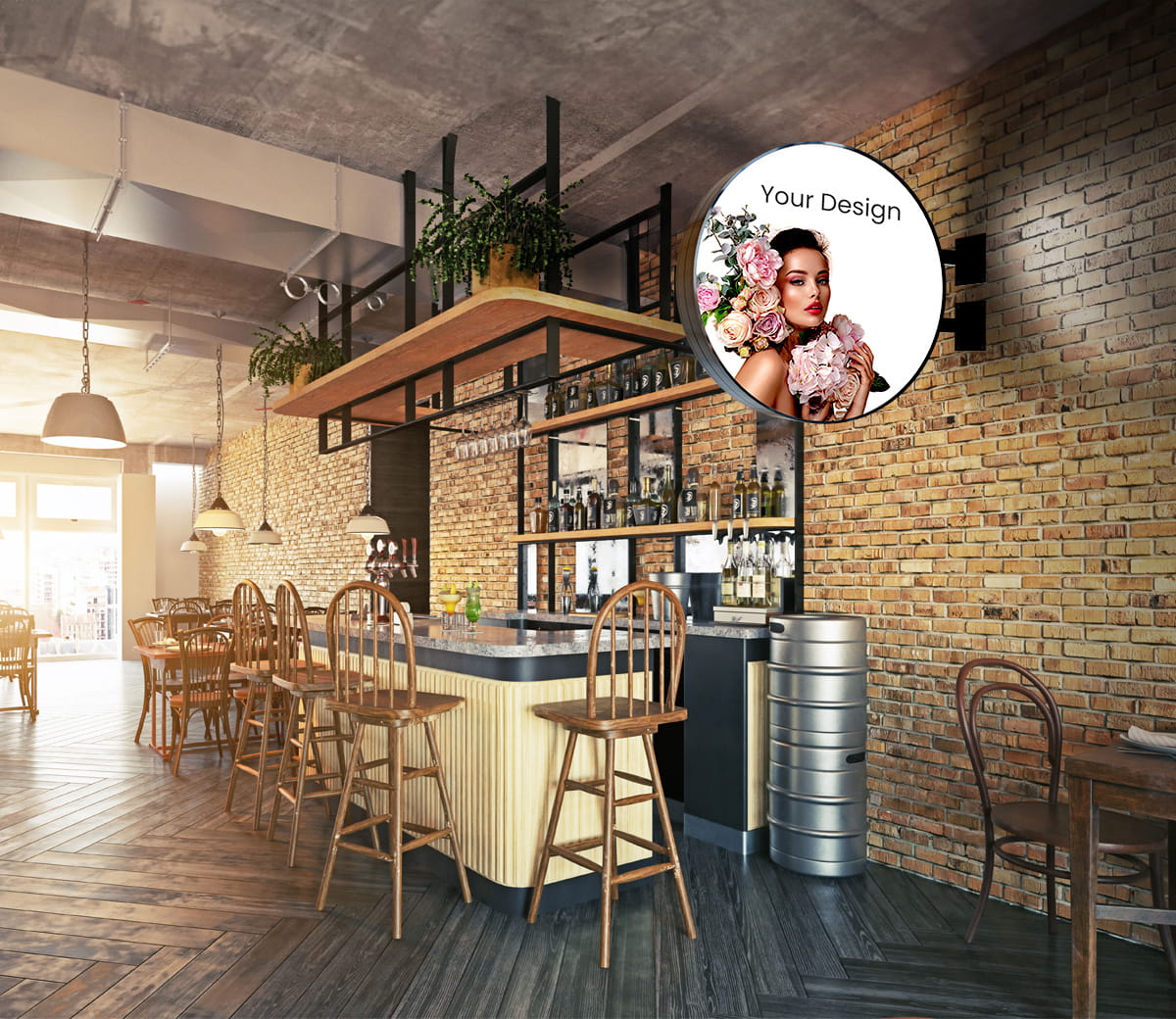
When planning a Semaphore, start with the way people will approach the building or interior area. A sign mounted perpendicular to the wall is most effective when the audience moves parallel to the facade, as it can be read earlier than a flat signboard. In interiors, it can help mark departments, reception points, offices or service zones. In outdoor locations, it supports visibility for retail, hospitality, medical, fuel station and service brands.
Design and file preparation
The key to an effective Semaphore is a simple and well-scaled layout. The available surface should not be overloaded with information. A clear logo, short wording and strong contrast usually give better visibility than many small elements. If the sign is illuminated, the graphic may be produced on foil or translucent film, depending on the required lighting effect and construction.
- avoid very thin lettering that may lose readability at a distance,
- adapt the shape to the logo proportions rather than forcing the logo into a circle or square,
- keep important elements away from edges and construction areas,
- consider the viewing direction before choosing one-sided or two-sided exposure.
Mounting and finishing considerations
The Semaphore may be mounted with outriggers perpendicular to the wall, suspended from the ceiling or placed directly on the ground, depending on the project conditions. The standard frame can be made in raw aluminium, and colour finishing from the RAL palette can be selected when the sign must match a facade, interior design or brand colour system. Mounting feet and the Plexi board form part of the construction specification.
For illuminated versions, LED edge lighting supports visibility after dark without changing the basic purpose of the sign: fast recognition and orientation. Twilight sensors can also be used in projects where automatic switching is preferred. They help turn the lighting on when ambient light drops, reducing the need for manual operation.
Common naming and ordering context
In everyday B2B enquiries, the Semaphore may also be referred to as a projecting light box, double-sided light box, illuminated projecting sign or facade sign. These names describe similar use cases, but the ordered product should still be specified by size, shape, mounting method, lighting requirements and graphic application.
Care and long-term use
The sign is easy to maintain. The external elements can be wiped with a wet cloth, which helps keep the graphic and Plexi surface presentable in everyday operation. For outdoor use, location, fixing method and access for servicing should be considered at the specification stage. Because each project is priced individually, it is worth providing the intended installation place, expected dimensions, shape, lighting needs and print file information when requesting a quotation.