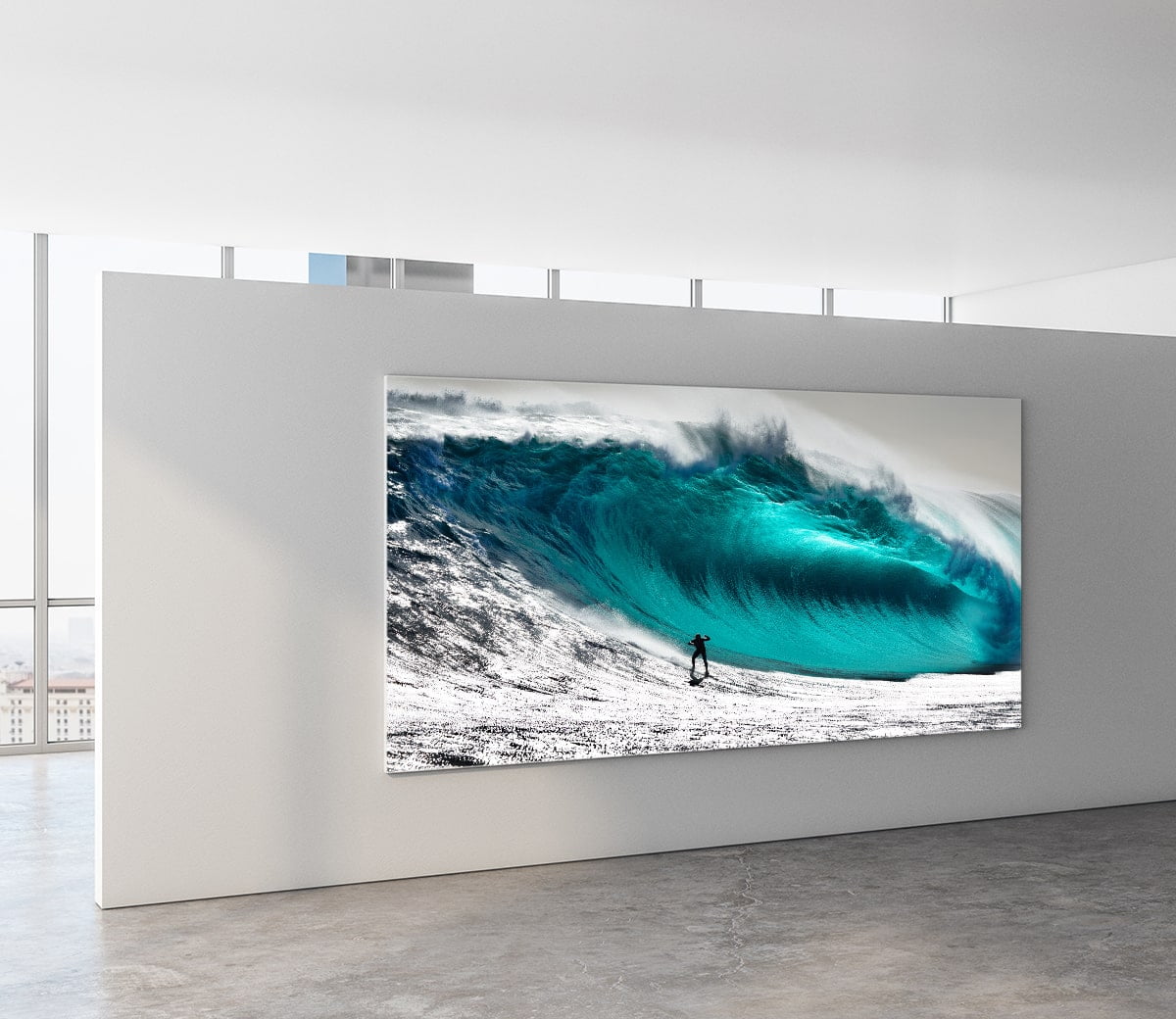
Photo paper
Photo paper is a glossy coated material for large-format photo prints, artistic graphics and high-impact visual presentations. It is a good choice when strong colour saturation, fine detail and an elegant finish are more important than outdoor durability. Printed on one side in CMYK, it supports sharp, expressive images for exhibitions, display cases, aluminium frames, interiors and promotional presentations.
| Intended use | presentation of photos |
|---|---|
| Grammage | 180 g/m² |
| Printing technology | Solvent |
| Print resolution | 1440 dpi |
| Maximum material width | 1,37 m |
| Colours | CMYK |
| Properties | shiny finish |




Photo paper is a coated printing material designed for the presentation of photographs, artistic graphics and decorative visuals in large format. Its shiny finish enhances colour depth and helps printed images look vivid, detailed and visually clear. This makes it suitable for projects where the print is meant to attract attention at close viewing distance, such as exhibitions, showrooms, offices, hotels or retail interiors.
What makes Photo paper suitable for visual presentation?
The material is printed on one side using solvent print technology in CMYK. A print resolution of 1440 dpi supports precise reproduction of details, gradients and photographic elements. The 180 g/m² grammage gives the print a stable feel while keeping the material practical for framed presentation, display cases and indoor decoration.
Photo paper is particularly useful when the visual effect of the print matters: saturated colours, glossy surface and good sharpness help emphasise product photos, exhibition graphics, event visuals or decorative artwork. It is not intended as a universal paper for every application; it is best selected for indoor or protected environments where image quality and presentation value are the key requirements.
Where can Photo paper be used?
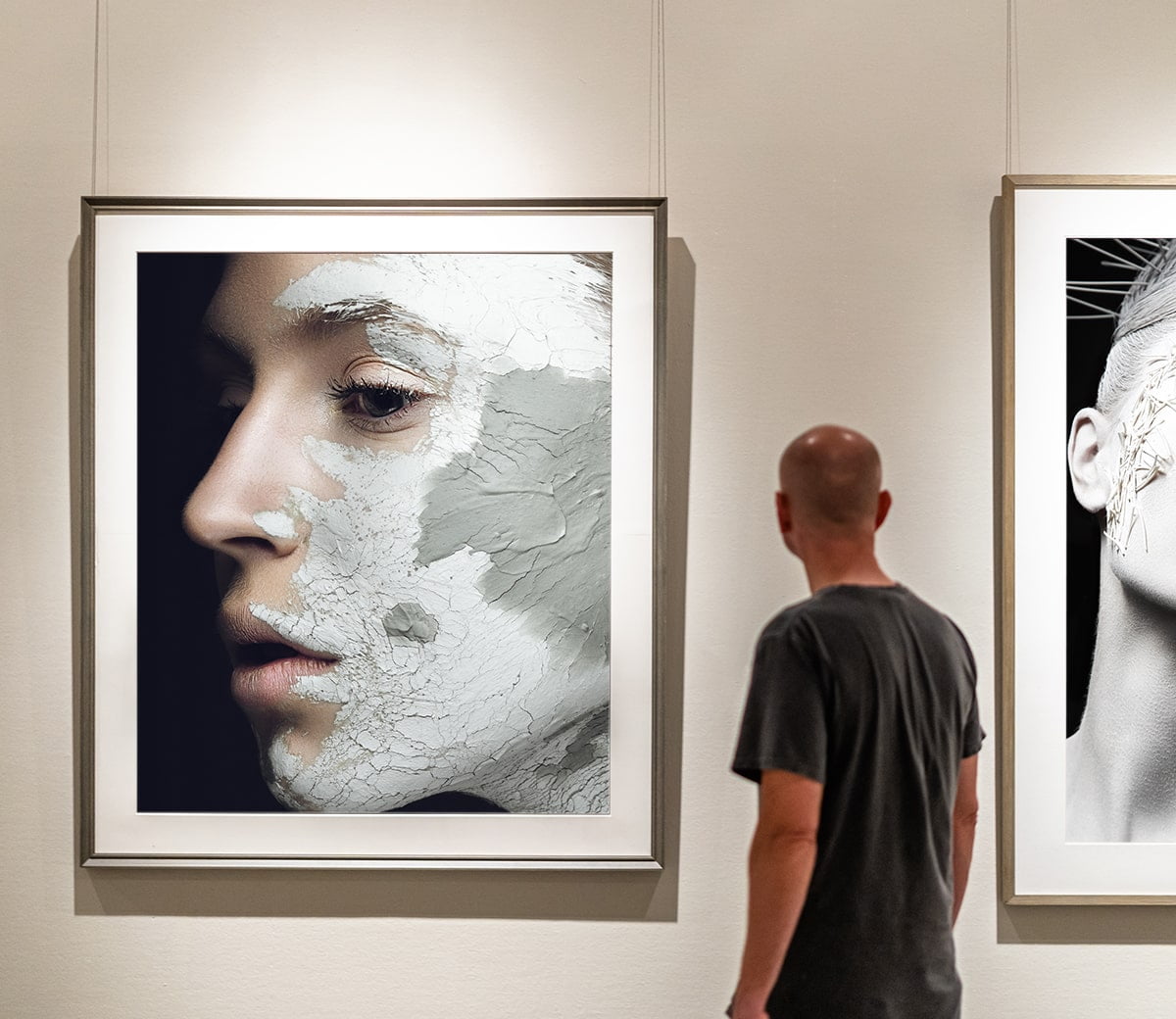
- photo exhibitions and artistic presentations,
- graphics mounted in aluminium frames or display cases,
- visual communication in showrooms, shops and shopping malls,
- hotel, café, restaurant and office interior decoration,
- conference, trade fair and information point presentations,
- personalised prints used as gifts or customer-facing visuals.
How to choose Photo paper for a project?
Choose Photo paper when the print will be viewed indoors and the main goal is an attractive, high-detail image with a glossy finish. The maximum material width is 1.37 m, so the final format should be planned with this production limit in mind. For projects exposed to weather, intensive handling or backlighting, a different material may be more appropriate.
Photo paper works best in applications where the print is part of the visual experience: a photo exhibition, a sales presentation, a branded interior, a product showcase or an image placed in a frame. Customers may also refer to this material as photographic paper or glossy photo paper, but in this product context the key point is its coated surface and suitability for one-sided, high-detail large-format printing.
Practical selection guidelines
Before choosing Photo paper, consider how and where the print will be used. If the print is to be placed in an aluminium frame, display case or protected indoor area, the glossy finish can highlight image depth and colour saturation. For interiors such as hotels, cafés, offices and showrooms, it can support a more refined presentation than standard paper intended mainly for short informational use.
- Choose it for photographs, posters and artistic graphics where image detail is important.
- Use it in protected indoor locations, especially where the print is viewed at close range.
- Plan the format according to the maximum material width of 1.37 m.
- Select another material if the print requires outdoor exposure or special resistance.
File preparation and production notes
Because Photo paper is often used for photographic content, file quality has a direct impact on the final effect. Low-resolution files, excessive compression or poorly prepared gradients can become visible in large format. For best results, prepare the artwork at the correct scale and with sufficient image resolution for the intended viewing distance.
Colours are printed in CMYK, so files prepared in RGB may look different after conversion. This is especially relevant for saturated blues, greens, skin tones and dark photographic areas. If colour consistency is important across multiple materials or campaign elements, it is worth planning the print files with the final production technology in mind.
Common mistakes to avoid
- Using Photo paper for applications where the print will be exposed to weather or heavy handling.
- Supplying small web images for large-format photographic prints.
- Ignoring the one-sided print specification when planning display or mounting.
- Choosing a glossy surface for places where strong reflections may affect readability.
When Photo paper is a good business choice
Photo paper is suitable when a company wants to present images with a more polished visual effect: during trade fairs, in showrooms, at information points, in medical centres, offices, restaurants or customer-facing interiors. It is also useful for personalised prints, gifts and decorative visuals where the quality of the image is part of the message.