
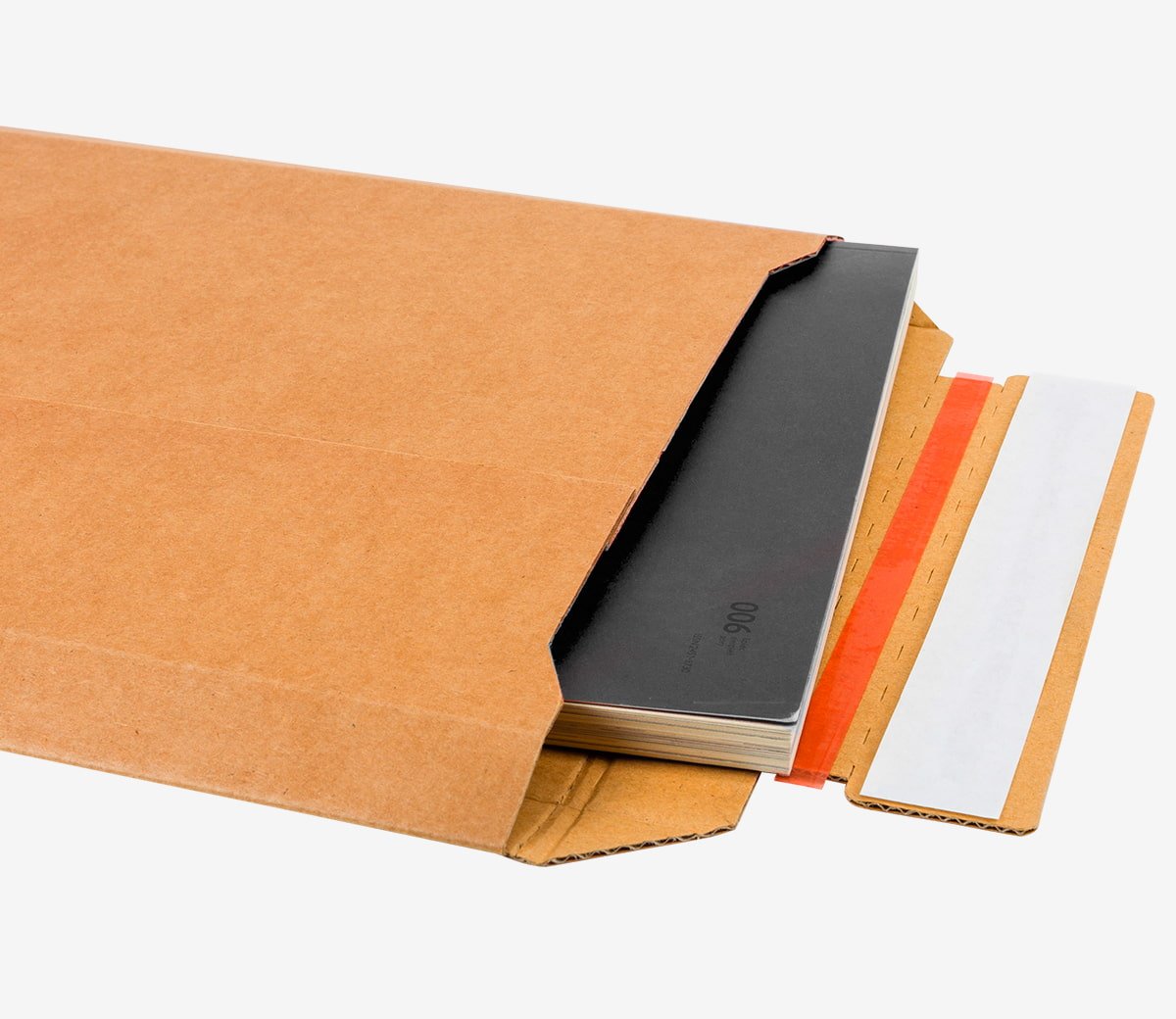
Shipping envelopes
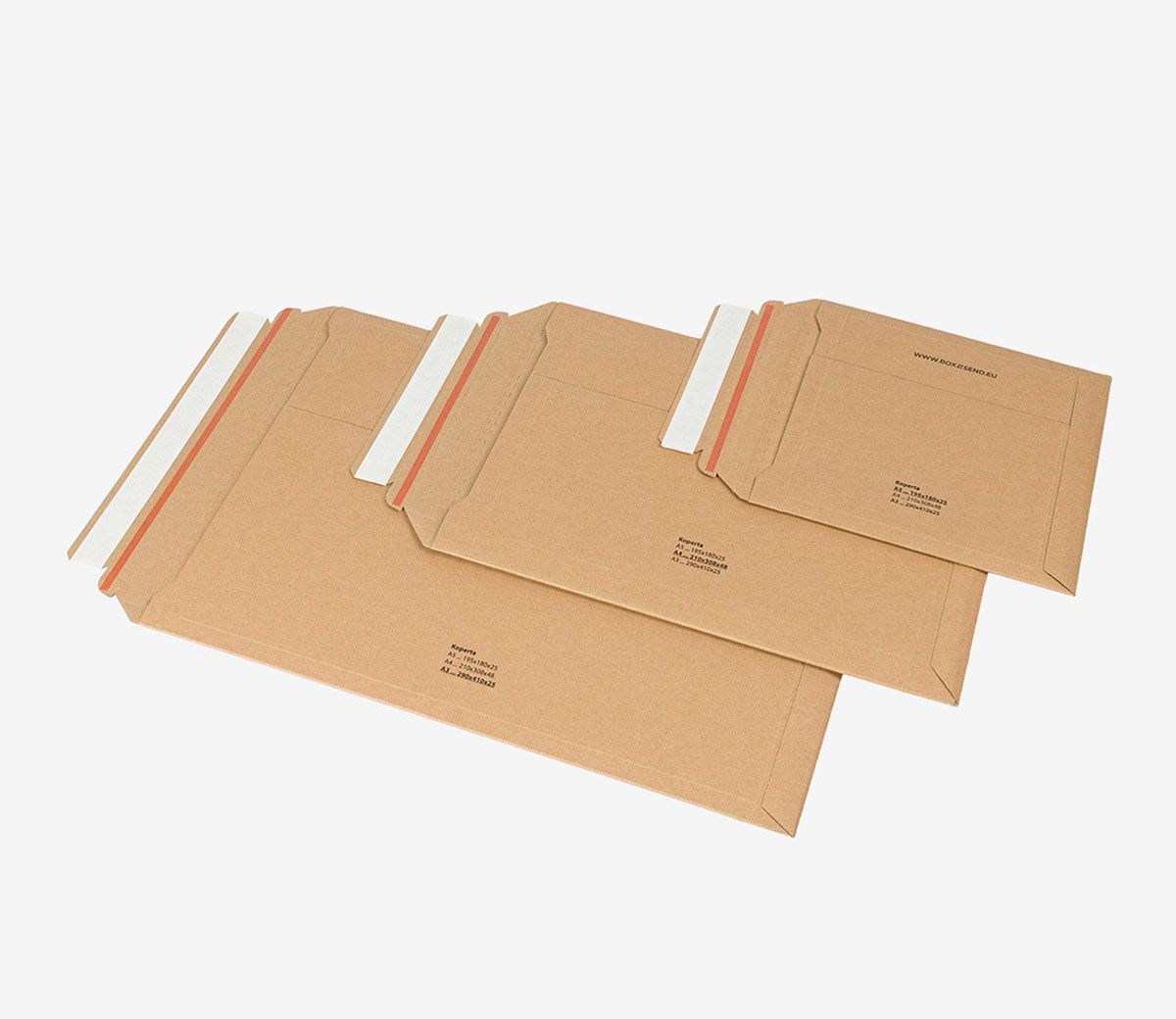
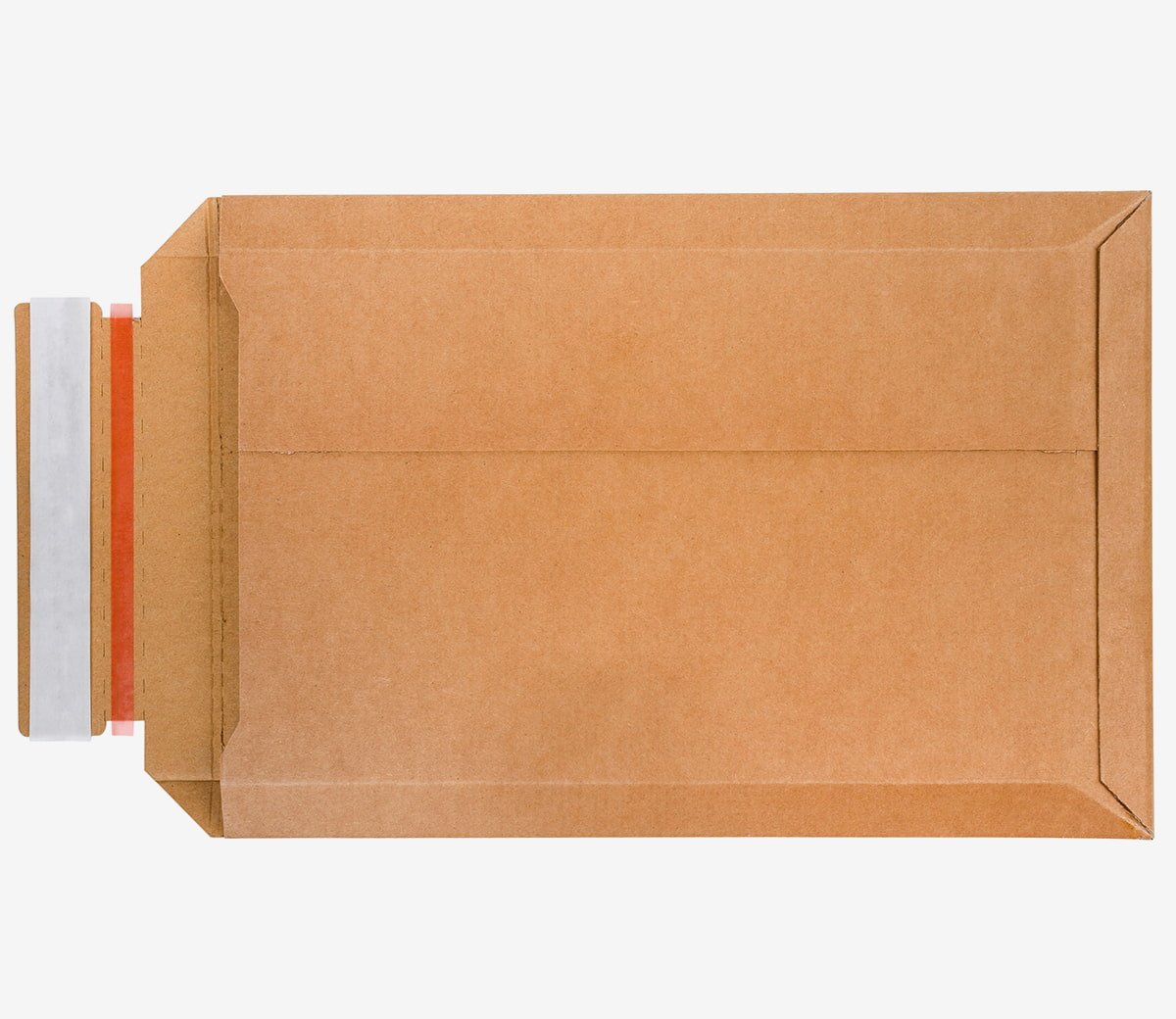
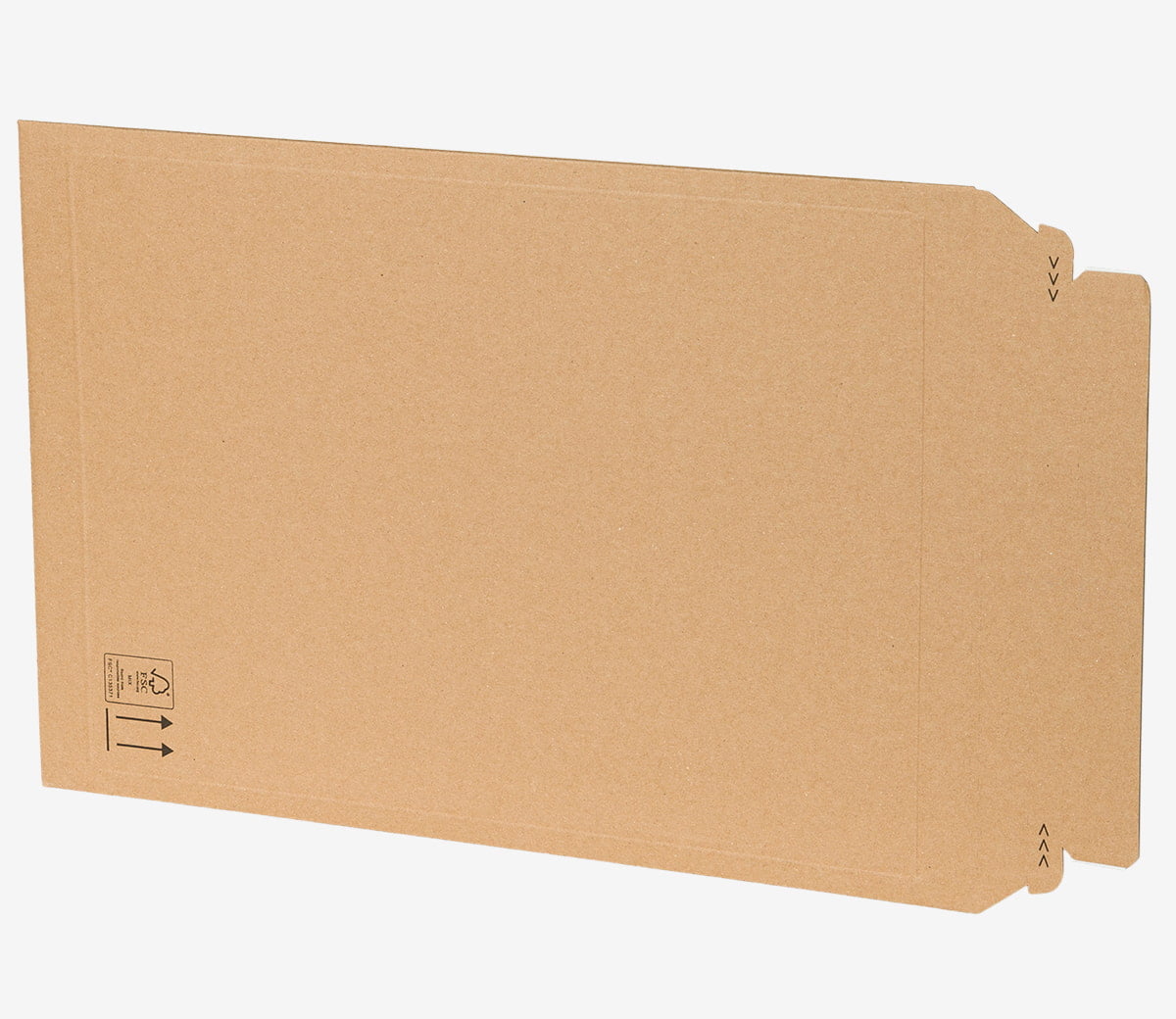
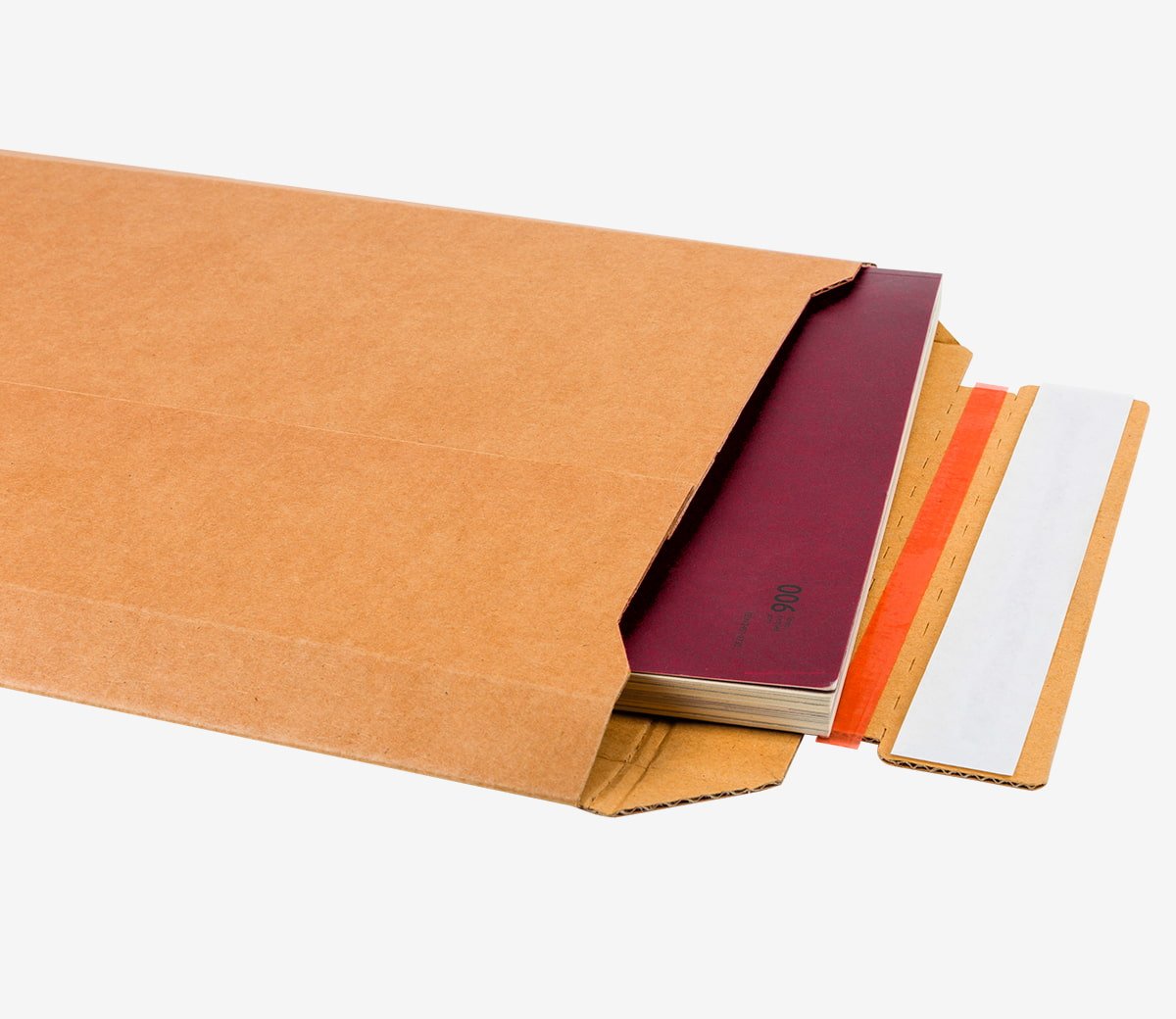
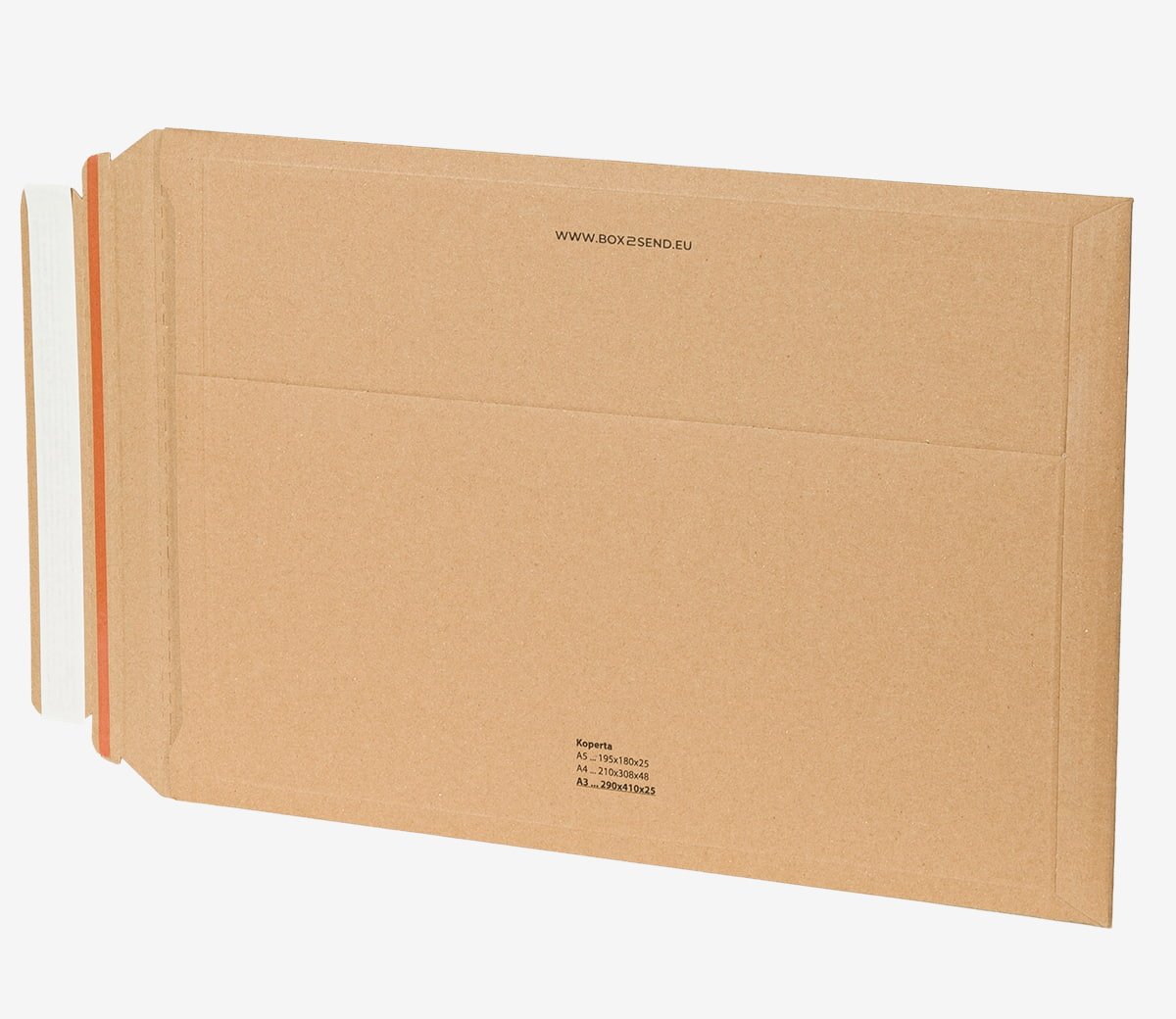
Shipping envelopes are rigid cardboard packaging for sending documents, catalogues, books and other flat or small items safely. Made from brown cardboard 380 wave E, they help protect contents during transport while remaining easy to store flat in an office or warehouse. The adhesive strip speeds up packing, and the tear tape makes opening simple for the recipient. They can be ordered unprinted or with personalised branding.
| Material | brown cardboard 380 wave E |
|---|---|
| Printing technology | flexo, CMYK |
| Sealing of the packaging | adhesive strip |
| Opening of the package | tear tape |
| Properties | easy to open and close, easy to transport and store, shipping documents, catalogues, small and flat items, the possibility of personalizing the package |
| Important information | Minimum order – 10 pcs. |





Shipping envelopes are practical cardboard packaging for flat, lightweight and small-format shipments that require better protection than standard paper envelopes. They are used for documents, catalogues, books, certificates, marketing materials and other items that should remain stable and protected during handling, storage and courier transport.
What makes these shipping envelopes practical?
The envelopes are made from brown cardboard 380 wave E, a three-layer corrugated material that increases stiffness and helps limit the risk of bending or surface damage in transit. This makes them a suitable choice for companies that regularly send printed materials, office documents, samples or flat products to customers, partners and branches.
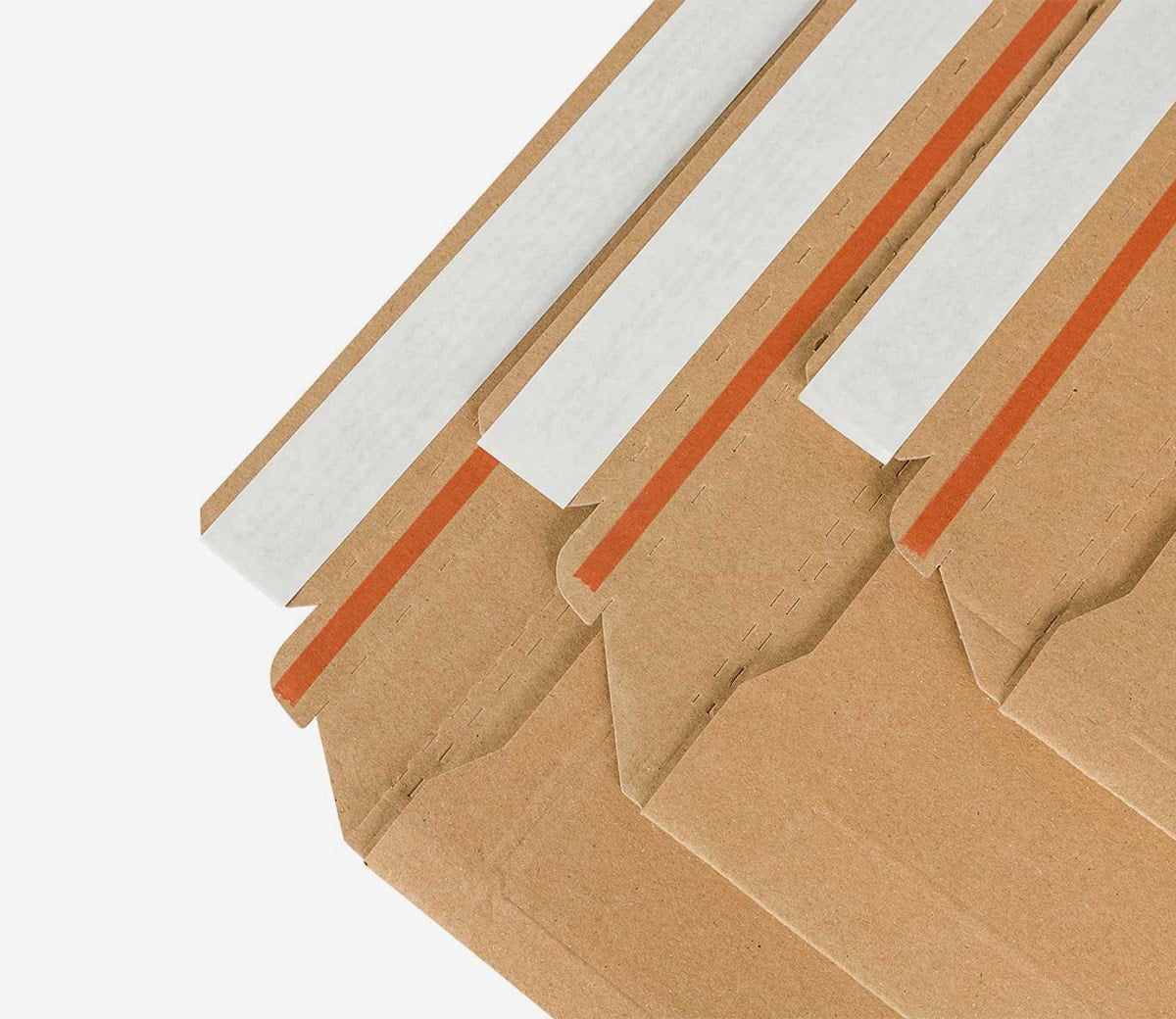
The packaging is designed for efficient daily use. The adhesive strip allows the envelope to be closed quickly without additional tape, while the tear tape makes opening clean and convenient for the final recipient. The closure also helps indicate whether the package has been opened before delivery, which is important when sending business documents or branded materials.
Available standard sizes
The standard offer includes four internal formats, allowing the packaging to be matched to the contents without using unnecessary filler:
- A5 shipping envelope – internal size 195x180x25 mm;
- A4 shipping envelope – internal size 210x308x48 mm;
- A4.1 shipping envelope – internal size 210x248x48 mm;
- A3 shipping envelope – internal size 290x410x25 mm.
Custom sizes can also be produced on request, which is useful when the shipment must fit a specific product, catalogue set or recurring mailing format.
Branding and print options
Shipping envelopes can be ordered as unprinted packaging or with personalised graphics. For many orders, single-colour flexo printing is the most economical branding option. Depending on the project, print can include a company logo, slogan, website address or QR code. CMYK print is also available where the order specification requires a broader colour range.
When are shipping envelopes a good choice?
Shipping envelopes work best when the item is flat, relatively small and should be packed quickly without building a full box. They are commonly used by offices, medical centres, hotels, trade fair organisers, information points and e-commerce teams sending documents, catalogues, invitations, booklets or printed promotional materials.
They are especially useful in recurring mailings because they are easy to transport and store. The flat format saves warehouse and office space, while the self-adhesive closure reduces packing time. For teams preparing larger batches of shipments, this combination helps standardise the packing process and keeps the visual presentation of parcels consistent.
How to choose the right size
The size should be selected according to the internal dimensions of the envelope, not only the paper format of the contents. If the shipment includes several catalogues, a book, a brochure set or documents with a cover, allow space for thickness as well as length and width. Choosing a format that is too tight can make closing difficult and may increase pressure on the edges of the contents.
- Choose A5 for compact documents, small brochures or lightweight inserts.
- Choose A4 or A4.1 for standard business documents, folders and catalogues.
- Choose A3 for larger printed materials that should not be folded.
- Ask for a custom size when the contents have a fixed or non-standard format.
Personalised print and file preparation
For branded shipping envelopes, the most common artwork includes a logo, contact details, website address, advertising claim or QR code. Flexo printing is a cost-effective choice for simple one-colour branding, while CMYK can be used when the design requires more colour information. Before production, it is worth checking whether the artwork is prepared in vector form where possible and whether small text or QR codes remain legible at the final print size.
A common mistake is placing important elements too close to folds, edges or the adhesive area. Branding should support clear identification of the sender without interfering with the closure or shipping label. If the envelope will be used with courier labels, leave a clean, practical space for the label and any required handling information.
Other names used for this packaging
In day-to-day purchasing, shipping envelopes may also be described as cardboard envelopes, courier envelopes, corrugated envelopes, rigid mailers or cardboard mailers. These terms usually refer to the same type of protective cardboard mailing packaging, but the final specification should always be confirmed by material, size, closure type and print requirements.
Ordering and production notes
The envelopes are available in standard sizes and can also be produced in a customer-specific format. The minimum order is 10 pcs. Standard size packaging is supplied in packs of 100. If you are planning a personalised print run, prepare the expected quantity, chosen format, print colours and artwork so the production team can verify the most suitable and economical solution.