
Pre-season event checklist
For agencies, marketers and event organisers
1. Timing and buffer
☐ Is the event date confirmed?
☐ Have you included time for production, delivery and installation?
☐ Do you have a buffer for artwork corrections or last-minute client changes?
In practice: the biggest pressure starts when everything is “urgent” and the file, weather or delivery has its own plan.
2. Venue and conditions
☐ Will the materials be used indoor or outdoor?
☐ Is the location exposed to wind, rain, sunlight or heavy foot traffic?
☐ Does the surface require extra weighting or a specific installation method?
In practice: the right solution for grass may be completely different from the one for concrete, a car park, a beach or a city centre.
3. Artwork and technical setup
☐ Are the graphics prepared for print, not only looking good on screen?
☐ Are bleed, margins, resolution and scale correct?
☐ Are sponsor logos complete and up to date?
In practice: even a great design can lose several days if the file comes back for corrections at the last minute.
4. Clear communication
☐ Will key messages be visible from the right distance?
☐ Can visitors immediately identify the entrance, registration area, zones, stage or info point?
☐ Do the signs guide people instead of simply being there?
In practice: nobody reads instructions during an event. Communication has to work at first glance.
5. Visibility for sponsors and partners
☐ Is sponsor exposure planned in advance?
☐ Are logos placed where people actually spend time?
☐ Have you included photo points, entrances, stage areas, chill zones and traffic routes?
In practice: sponsors are not paying for a logo on material. They are paying for visibility and context.
6. Materials and durability
☐ Are the selected materials suitable for the event conditions?
☐ Can they withstand outdoor use, transport and installation?
☐ Can they be reused for future events?
In practice: the cheapest option is rarely the most cost-effective if it does not survive first use.
7. Installation and transport
☐ Do you know who installs everything and when?
☐ Are the systems easy to assemble and transport?
☐ Will everything fit into the car, van or event storage?
In practice: a system that looks great in a catalogue but complicates setup does not help your team on event day.
8. Consistency of the whole space
☐ Do banners, flags, tents, backdrops and signage work together as one concept?
☐ Are colours and messages aligned with the event brand?
☐ Will the space also look good in photos and social media coverage?
In practice: attendees do not judge each element separately. They experience the event as a whole.
9. Number of suppliers
☐ Are all elements ordered from one partner or from several different suppliers?
☐ Is someone controlling consistency of materials, deadlines and production methods?
☐ Do you have one contact point if something needs to change quickly?
In practice: the more suppliers involved, the more places a project can go off track.
10. Plan B
☐ Have you planned spare signage, backup elements or fast reorders?
☐ Do you know what happens if the layout, sponsor list or weather changes?
☐ Can your supplier react quickly if needed?
In practice: outdoor events do not follow assumptions. They reward preparation.
Final note
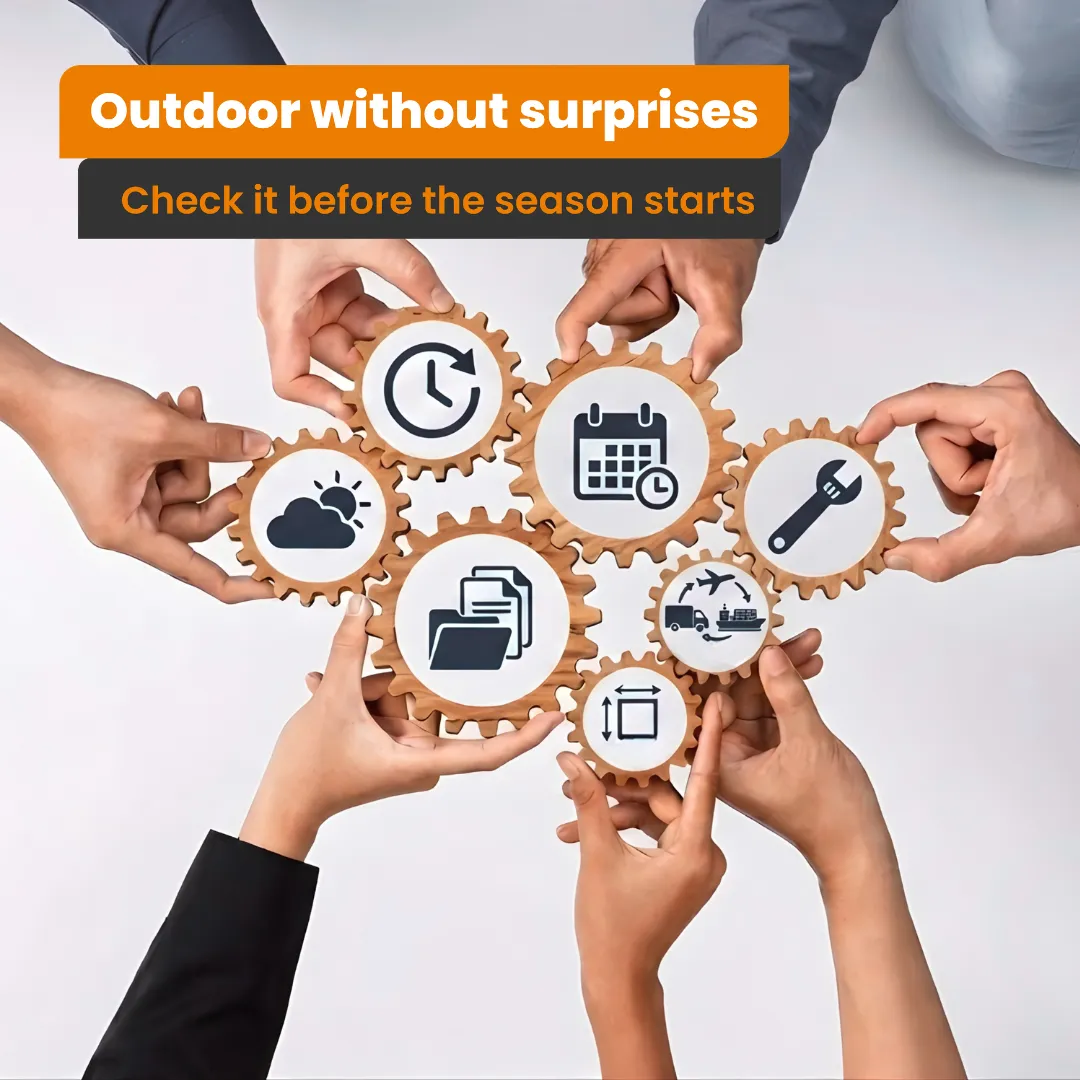
Outdoor without surprises does not mean nothing changes.
It means you are ready when it does.
Well-chosen materials, approved artwork, clear communication, efficient installation and one reliable production partner can save time, budget and stress.
We’ve prepared a checklist to guide you through the entire event preparation process — from planning to execution.